12 Small Bedroom Ideas, With the Sizes That Make Them Fit
A small bedroom works when every piece is the right size for it. Each idea below comes with its numbers and a link to the calculator that works them out for your room: a queen bed, for one, fits a room from 10 × 10 ft.
By Nora Callahan · Updated

Measure the room wall to wall before you buy anything, and note where the door swings and the closet opens. Keep about 3 ft of floor clear from the doorway to the nearest furniture. Then take the ideas in order. The bed comes first, because it decides how much floor everything else gets. Before you order one, mark its outline on the floor with painter’s tape and walk the walkways it leaves.
1. Start with the largest bed the room can take
Leave about 24 in of walkway on each side you use and at the foot. With that, a queen (60 × 80 in) fits a room from 10 × 10 ft, a full (54 × 75 in) from 9 × 9 ft and a twin (38 × 75 in) from 8 × 9 ft. Count the frame too. It adds about 5 in to the mattress each way, so a queen on a standard frame takes about 65 × 85 in of floor. A king is more comfortable in a room of 12 × 12 ft, which leaves room for nightstands and a dresser as well.
In a 10 × 10 ft room, a queen leaves 27.5 in on each side and 35 in at the foot. A king would leave 19.5 in on each side and 35 in at the foot, more than the 18 in minimum but short of 24 in, so the calculator marks it Tight. In most small bedrooms, a queen is the largest bed that still leaves comfortable room around it.
Try it with your room: Bed Size Calculator
2. Push the bed against a side wall
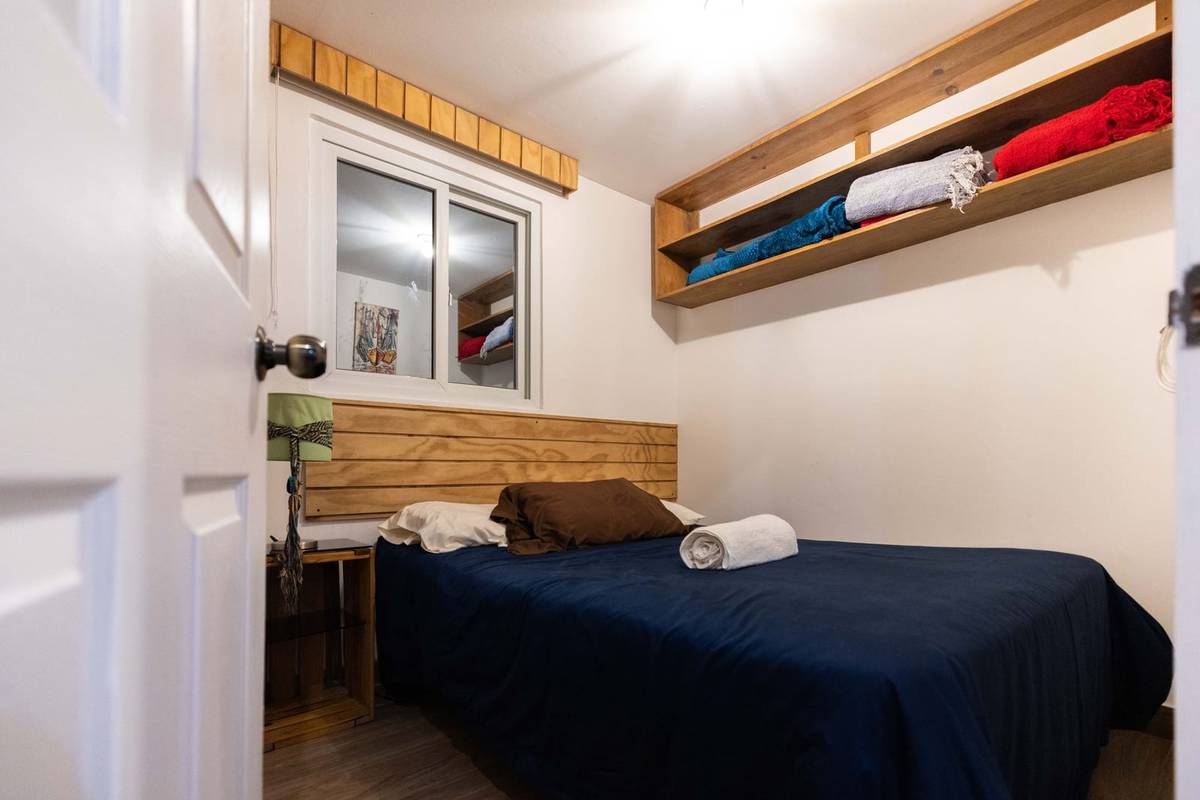
With one long side against the wall, the bed needs one walkway instead of two, so the same bed fits a narrower room. It works well in a narrow room, or with the bed tucked into a corner.
Worked example
A 7 × 10 ft room with the bed against a side wall
What we know
- Room: 7 × 10 ft
- Bed: against a side wall, standard frame
How it works out
- Full: a 59 × 80 in frame leaves 25 in on the open side and 40 in at the foot: Fits.
- Queen: a 65 × 85 in frame leaves 19 in on the open side and 35 in at the foot: Tight.
A full bed, with 25 in on the open side and 40 in at the foot.
Making the bed gets harder, though, and whoever sleeps on the wall side has to climb over, so it suits one sleeper best. If the bed has storage drawers, keep them on the open side.
Try it with your room: Bed Size Calculator
3. Choose a bed with drawers underneath
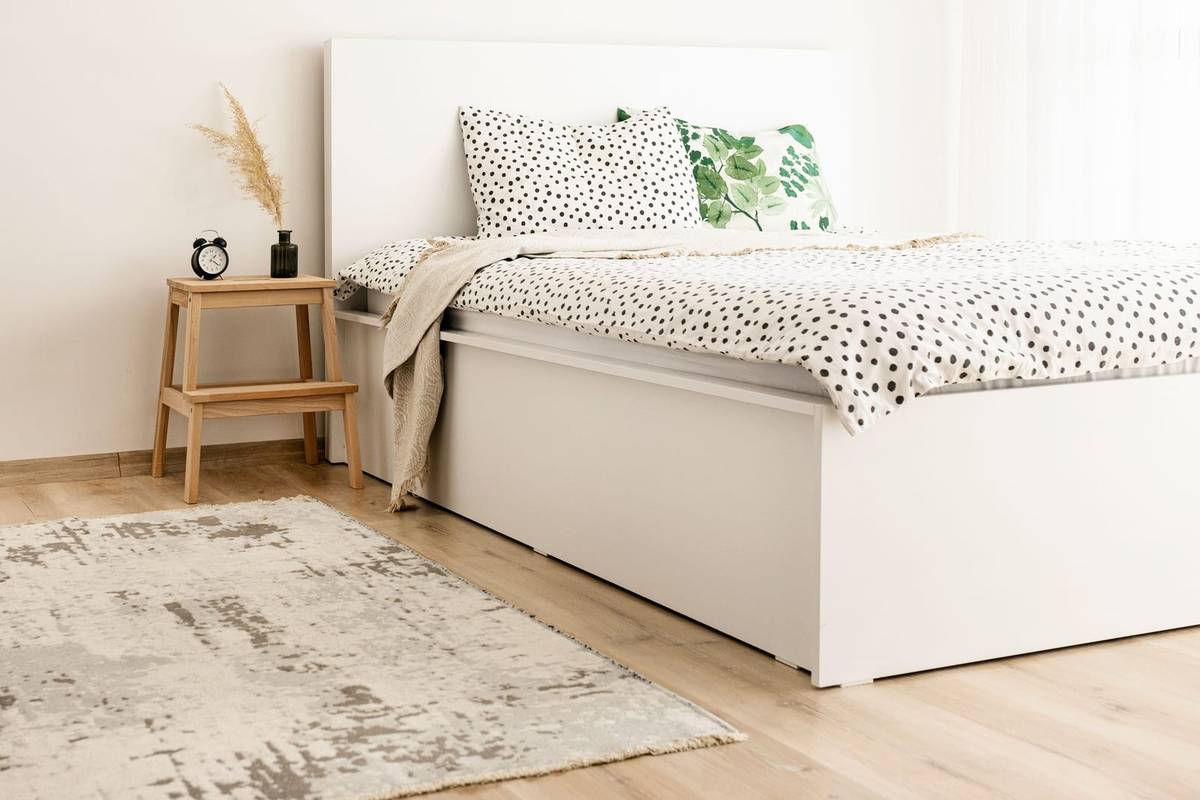
A bed with drawers in its base stores bedding in space the mattress already takes, so the room may need one less piece of storage furniture. Plan the floor beside it for the drawers as well as for you, since they need room to slide all the way out. A storage bench at the foot of the bed is another place for blankets, and a place to sit.
4. Go narrow at the bedside
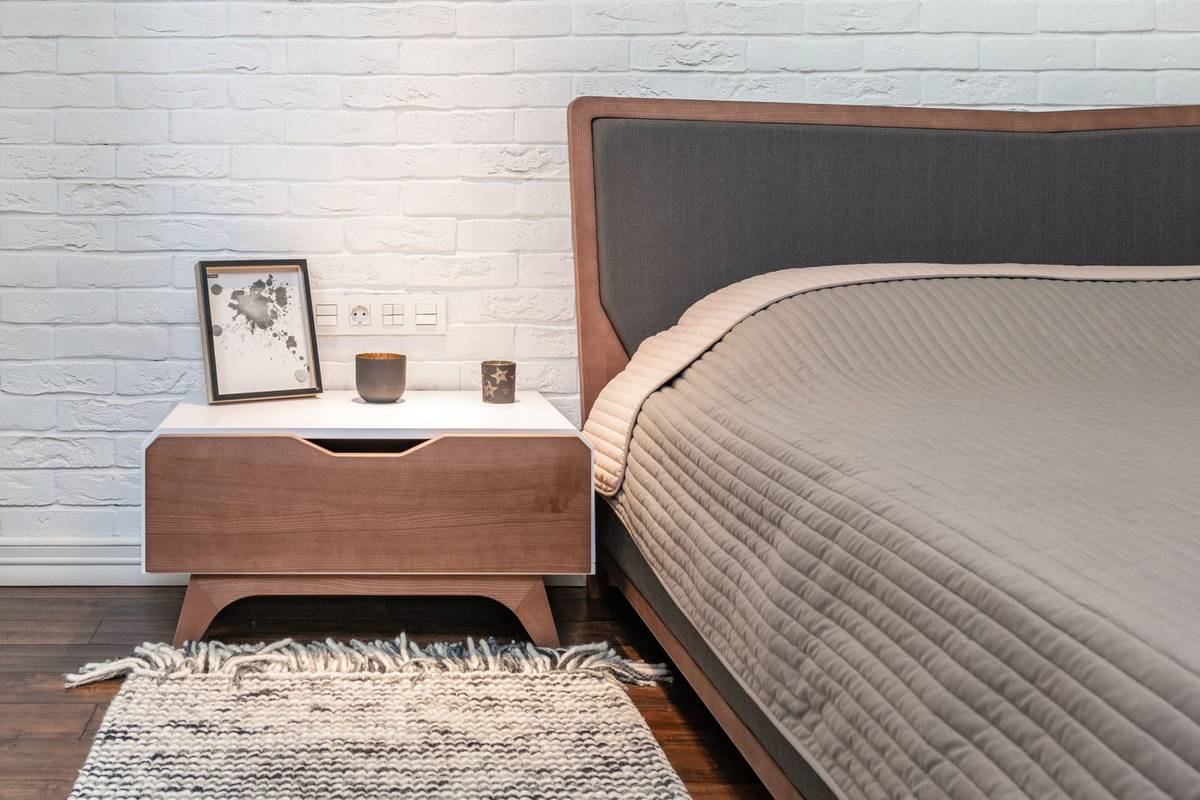
A standard nightstand is about 18 in wide, set 2 to 6 in from the bed. In a small bedroom, look for one 10 to 15 in wide, or use one nightstand and a wall shelf on the other side. For comparison, a queen bed usually takes one 18 to 28 in wide where there’s room. Whatever the width, keep its top level with the mattress top, within 2 in above or below it. Most nightstands are made 24 to 28 in tall, so a low platform bed or a tall one narrows the choice.
Try it with your room: Nightstand Height Calculator
5. Put the lights on the wall
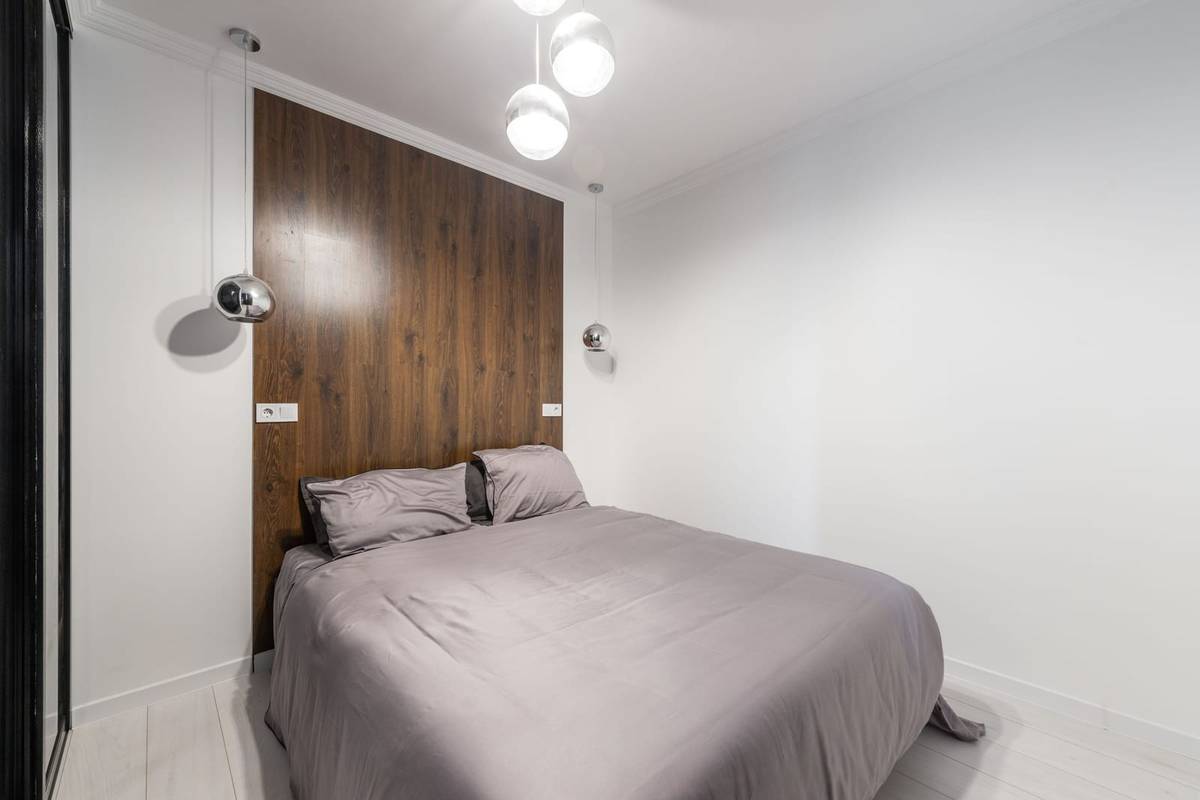
A light mounted on the wall beside the bed leaves the nightstand’s top free, and with a single nightstand it saves even more space. Pendants hung at the sides of the bed, as in the photo, need no nightstand at all. Where you keep a nightstand, a slim table lamp leaves more of its top free.
For the room as a whole, a bedroom needs about 10 to 20 footcandles, and one footcandle is one lumen per square foot. That comes to 1,440 to 2,880 lumens for a 12 by 12 ft bedroom.
Try it with your room: Room Lumens Calculator
6. Let the headboard do more of the work
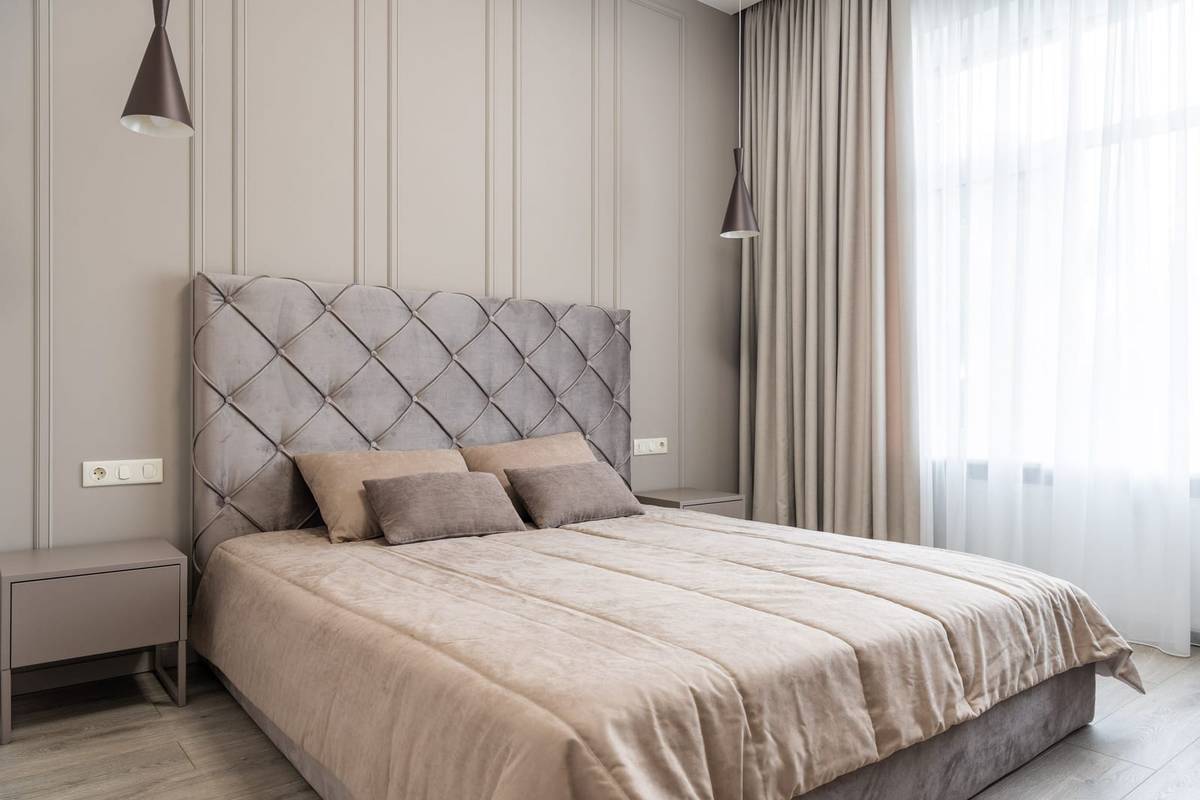
Make the headboard about as wide as the mattress, no more than 2 in past each side. A queen headboard is usually about 62 in wide. A standard one has its top 42 to 48 in from the floor, and a tall one stands 52 in or more. A headboard can also hang on the wall instead of bolting to the frame. Its bottom edge then goes 3 to 4 in below the top of the mattress, hidden behind it.
Try it with your room: Headboard Size Calculator
7. Size the art to the bed
Art above a bed looks right at about two-thirds to three-quarters of the bed’s width, which comes to 40 to 45 in above a queen. Leave about 8 in between the top of the headboard and the bottom of the frame. In a small room, one large piece above the headboard anchors the wall.
Try it with your room: Wall Art Size Calculator
8. Hang the curtains high and wide
Mount the rod at least 4 to 6 in above the window, or halfway to two-thirds of the way to the ceiling to make the window look taller. Run it at least 4 in past each side, so the open curtains stack beside the glass instead of over it, and let the panels end about 0.5 in above the floor. Ready-made panels come in 63, 84, 95, 96, 108 and 120 in. For the width, the panels together should measure about 2× the rod’s length, and flat panels (grommets, rod pockets, tabs) need at least that much.
Try it with your room: Curtain Size Calculator
9. Pick a rug that frames the bed
Under a bed, the rug sits under the lower two-thirds of it and should show about 24 in past the sides and the foot. 18 in is a fine compromise in a small bedroom, and a queen reaches the full 24 in on an 8 × 10 ft rug. Leave bare floor between the rug and the walls too, down to 8 in in a small room. Where even that doesn’t fit, put a runner on each side of the bed instead.
Try it with your room: Rug Size Calculator
10. Size the comforter to the drop you want
A comforter hangs over the sides, so its size depends on the look. A queen comforter (88 × 92 in) hangs about 14 in at each side of a queen mattress. A king (106 × 92 in) hangs about 23 in, nearly to the floor of a bed 25 in high, but only 12 in at the foot. Most mattresses are 10 to 12 in deep, and a thicker one takes more of the drop.
Try it with your room: Comforter Size Calculator
11. Leave room to open the dresser and the door
A dresser facing the foot of the bed is about 18 in deep and needs about 36 in in front of it, so you can walk by and open the drawers, 24 in at the least. In a small room, a tall dresser near the closet takes less floor than a wide one. Leave a hinged closet door room to open fully too.
12. Give a small guest room a full bed, or a twin and a desk
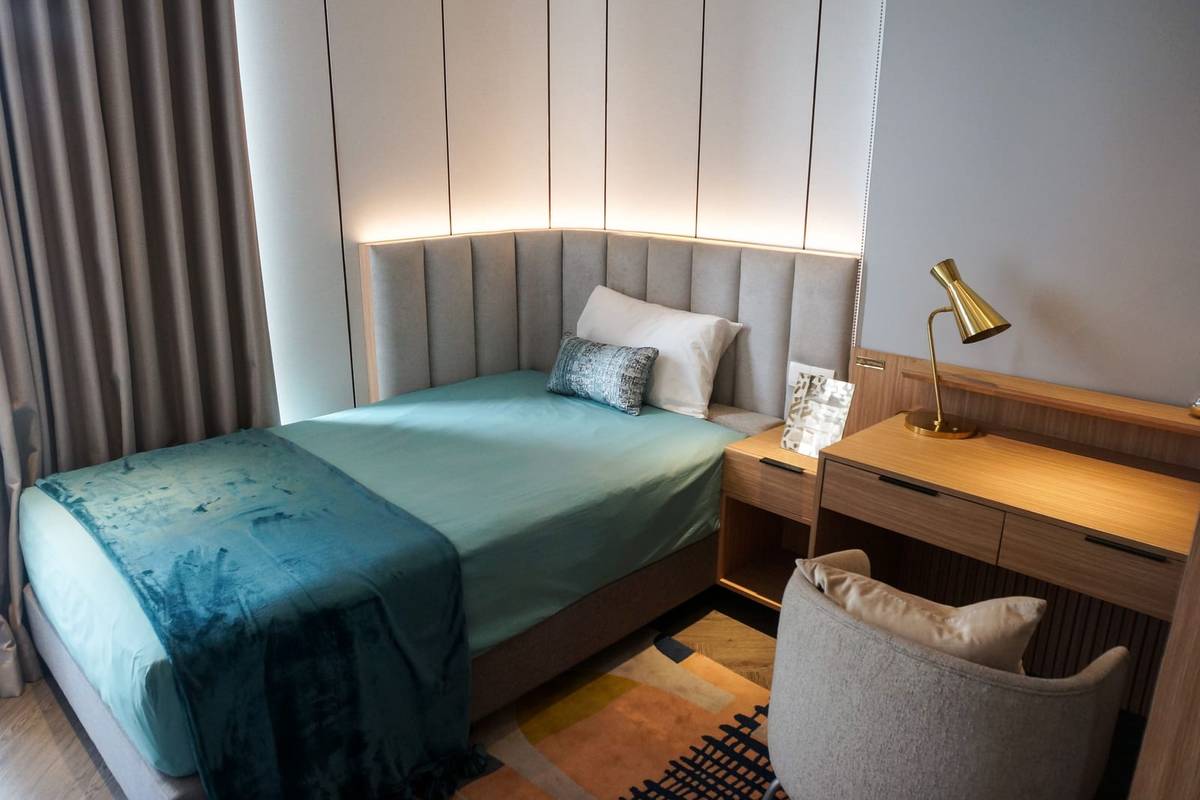
A full bed sleeps two guests, but shared it leaves each person 27 in, and it fits a room from 9 × 9 ft. A twin fits from 8 × 9 ft and leaves room for a desk, which can double as the nightstand when it stands beside the bed. Furniture on raised legs shows more of the floor, and light walls make the room feel more open.
Every bedroom calculator is on the Bedroom page, and room sizes you enter in one carry over to the others.
Frequently asked questions
What size bed fits a small bedroom?
A queen fits a room from 10 × 10 ft with about 24 in of walkway on both sides and at the foot, and a full from 9 × 9 ft. With the bed against a side wall, so it needs one walkway instead of two, the same bed fits a narrower room.
How wide should nightstands be in a small bedroom?
About 10 to 15 in wide, with the top within 2 in of the mattress top. Where even that doesn't fit, a wall shelf at mattress height can stand in for one of them.
How do you make a small bedroom look bigger?
Hang the curtain rod halfway to two-thirds of the way to the ceiling, which makes the window look taller. Keep the walls light, and choose furniture on raised legs that shows more of the floor.
Should a bed go against the wall in a small room?
It can, on a side nobody gets in from. It frees floor space, but the bed is harder to make and suits one sleeper best.
Save it for later
Pin this page so it's handy when you're ready to buy.
Save to Pinterest (opens in a new tab)