12 Entryway Ideas, With the Sizes That Make Them Work
An entryway works when you can walk through it with your arms full. Each idea below comes with its numbers and a link to the calculator that works them out for your entry: leave 36 in to walk past a console, for one, and 4 to 6 in of floor beside a runner.
By Nora Callahan · Updated

Measure the entry before you shop. Take the hall wall to wall at its narrowest point and end to end along the path you walk, and note where every door swings. For a console or a bench, measure the open stretch of wall and the space in front of it, out to the opposite wall, the nearest furniture or the edge of a door’s swing.
Then plan everything around the path. A console, a bench and a rug all have to leave room to come in with a bag on your shoulder.
1. Keep a clear path through the door
Leave about 36 in clear between anything on the wall and whatever is across from it: the opposite wall, a piece of furniture or the swing of a door. In a tight entry, 30 in still lets you pass.
The International Residential Code sets 36 in as the narrowest a hallway can be. A hall that’s only that wide has no room for furniture along it at all, so keep it for a runner and the art on the walls.
Try it with your room: Entryway Runner Size Calculator
2. Size the console to its wall
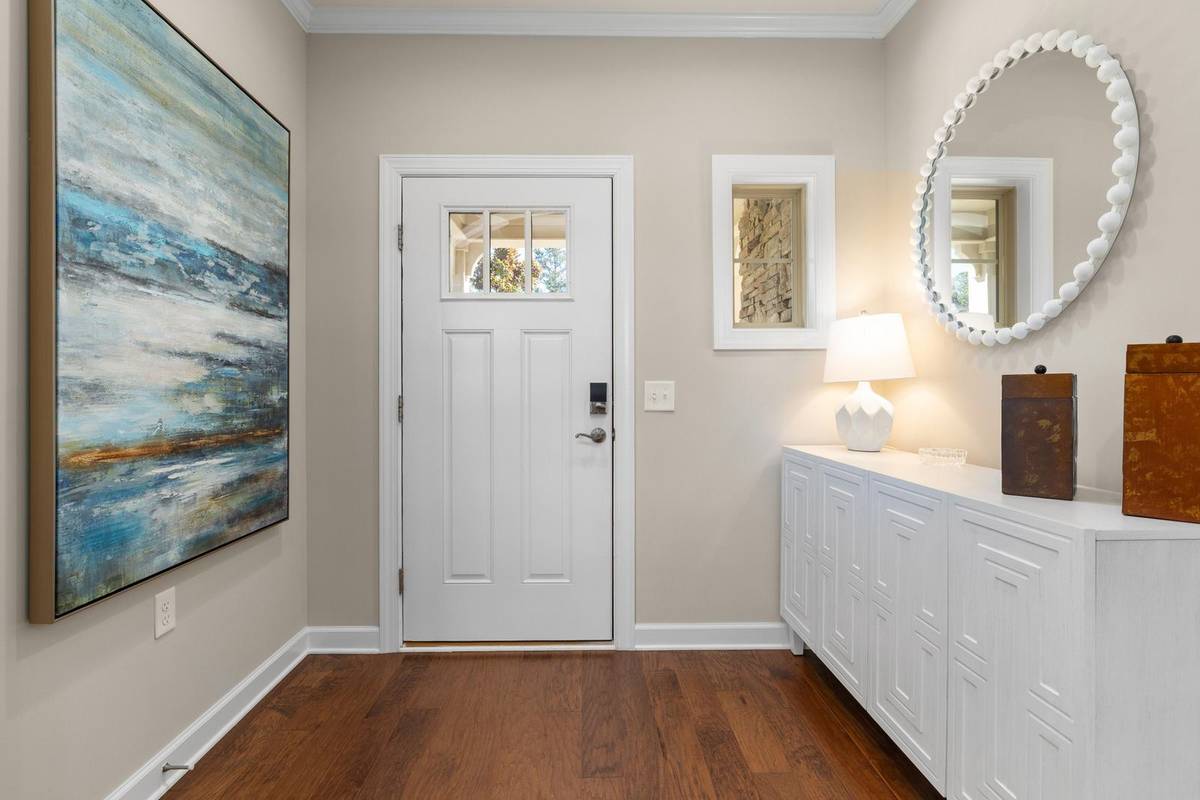
A console looks balanced at about two-thirds as long as the wall it stands against, so about 48 in on a 6 ft wall. Then let the space in front set its depth. Take 36 in off that space: with 50 in in front, as in the drawing above, a console up to 14 in deep still leaves the full walkway.
Most consoles stand 30 to 34 in high, and their depths run from 10 to 18 in. Check the depth on the product page as well as the length, since it’s the number that decides whether you can walk past.
Try it with your room: Entryway Runner Size Calculator
3. Go slim in a small or narrow entry
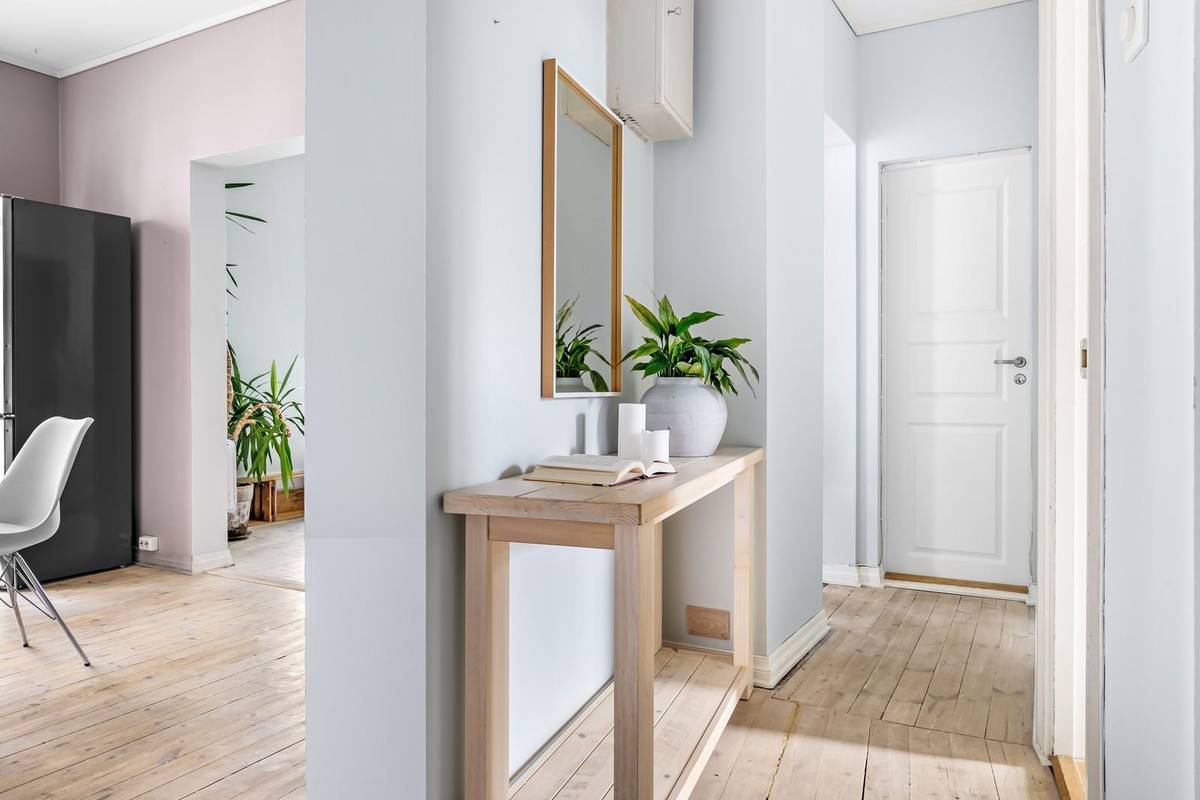
In a small entry or an apartment hallway, depth matters more than length. With 46 in between the wall and the opposite side, a console can be only 10 in deep before it eats into the walkway, the slim end of the 10 to 18 in that consoles come in.
Where even that is too deep, look for a wall-mounted console or a shelf. It holds keys and mail and leaves the floor below it clear.
Try it with your room: Entryway Runner Size Calculator
4. Hang a mirror over the console
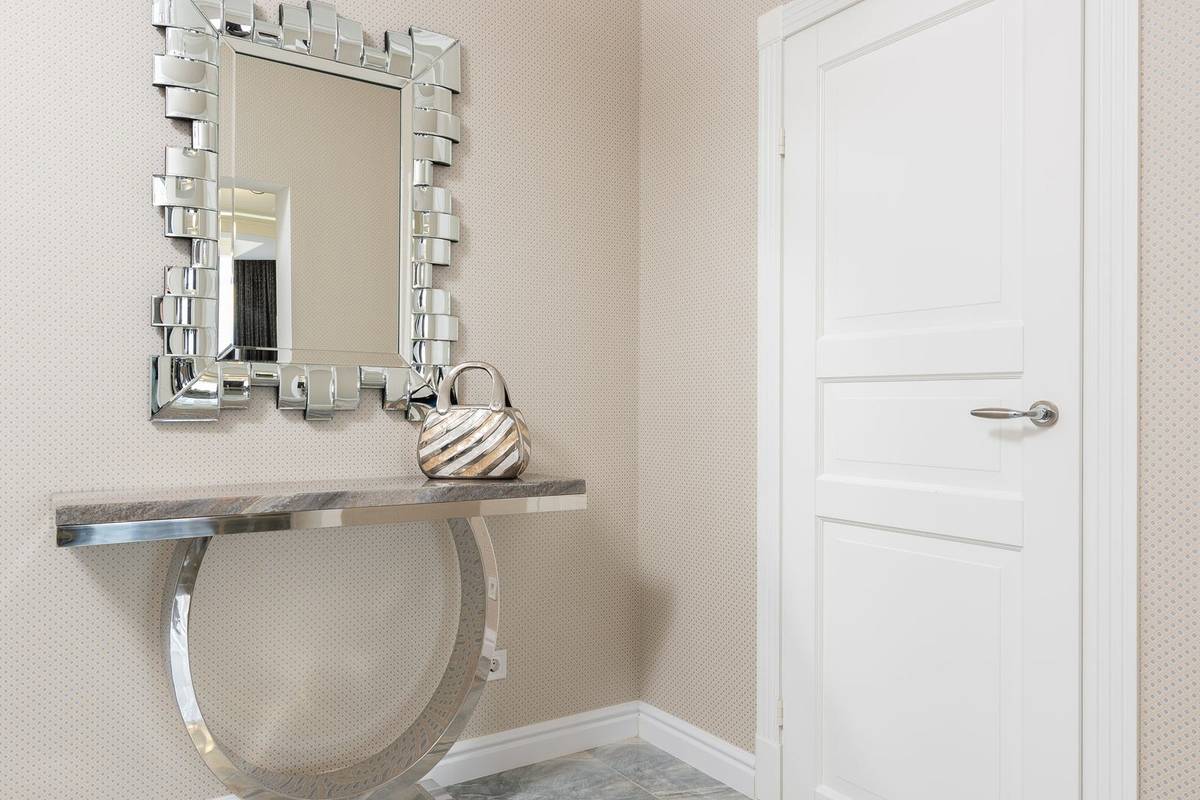
A mirror or a piece of art above a console looks best at about two-thirds to three-quarters of the console’s width: 32 to 36 in over a console 48 in long. Keep it a little narrower than the console rather than matching it.
Hang it with its bottom about 8 in above the top of the console, anywhere from 6 to 12 in.
Try it with your room: Wall Art Size Calculator
5. Choose a runner that shows floor on both sides
A runner looks right with about 4 to 6 in of floor showing on each side and 6 to 12 in at each end. In a hall 42 in wide, that’s a runner 30 to 34 in wide, so a stock 2 ft 6 in runner, the width closest to 5 in a side. In a 12 ft hall, a stock 10 ft runner leaves the right amount of floor at each end.
Runners come 2 ft, 2 ft 3 in, 2 ft 6 in and 3 ft wide, in stock lengths from 5 ft to 20 ft. When the hall falls between two stock lengths, size down.
Try it with your room: Entryway Runner Size Calculator
6. Go narrower in a narrow hall
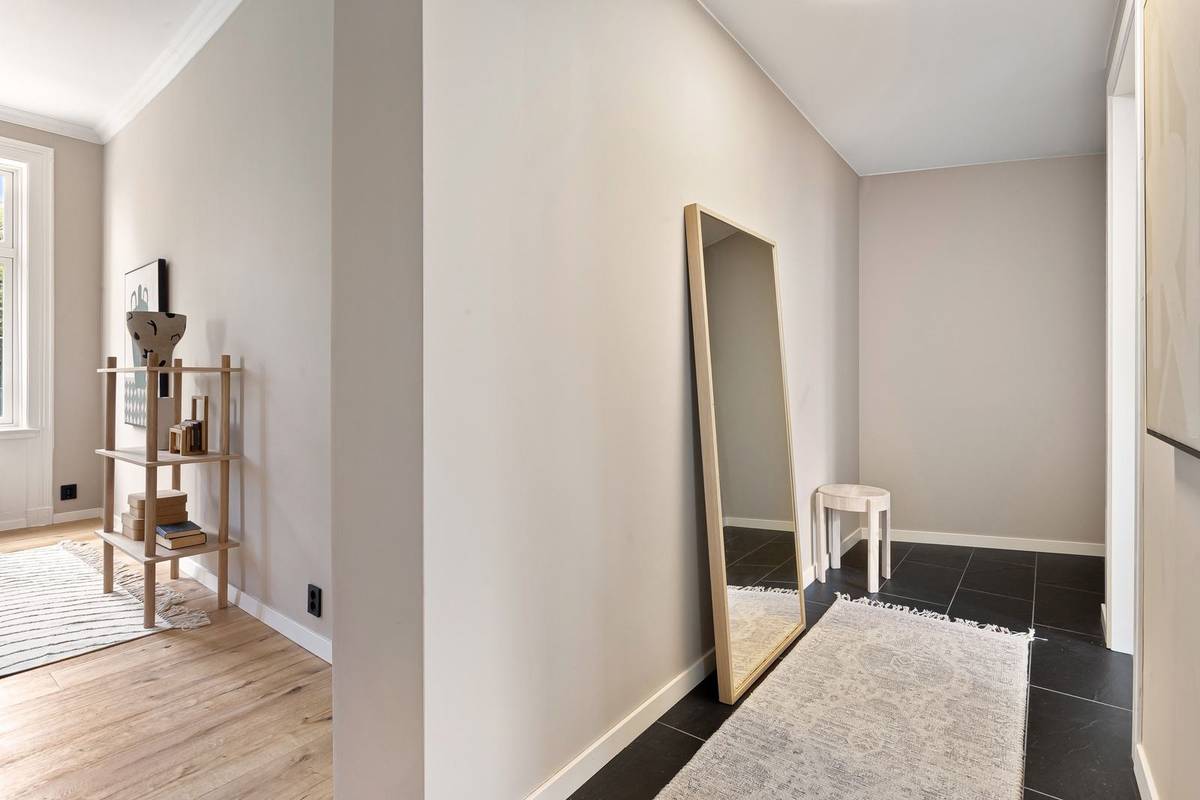
A narrow hall can show a little less floor at the sides, down to 3 in. In a hall 36 in wide, look for a runner 24 to 28 in wide, which makes a stock 2 ft 3 in runner the one to buy.
Worked example
A 36 in wide hall, 15 ft long
What we know
- Hall width: 36 in
- Hall length: 15 ft (180 in)
How it works out
- Width: 36 in − 2 × (4 to 6 in) = 24 to 28 in; the stock width closest to 5 in a side is 2 ft 3 in.
- Length: 180 in − 2 × (6 to 12 in) = 156 to 168 in; the longest stock length that fits is 14 ft.
For a 36 in wide hall, look for a runner 24 to 28 in wide, which leaves 4 to 6 in of floor on each side. 2 ft 3 in is the stock width closest to 5 in a side. For a 15 ft hall, a runner 13 ft to 14 ft long leaves 6 to 12 in at each end; 14 ft is the longest stock length that does. Start the runner past the swing of a door that opens over it, and check that the rug and its pad fit under any door that closes across it.
Try it with your room: Entryway Runner Size Calculator
7. Lay two runners in a long hall
Stock runners stop at about 20 ft. In a longer hall, order a custom length, or lay two runners of the same size end to end with 3 to 8 in between them. Measure the floor showing beside the runners and leave about the same between them, so the pair reads as one.
Keep the gap out of a doorway, where an edge is easiest to catch with a foot.
Try it with your room: Entryway Runner Size Calculator
8. Put a small rug inside the front door
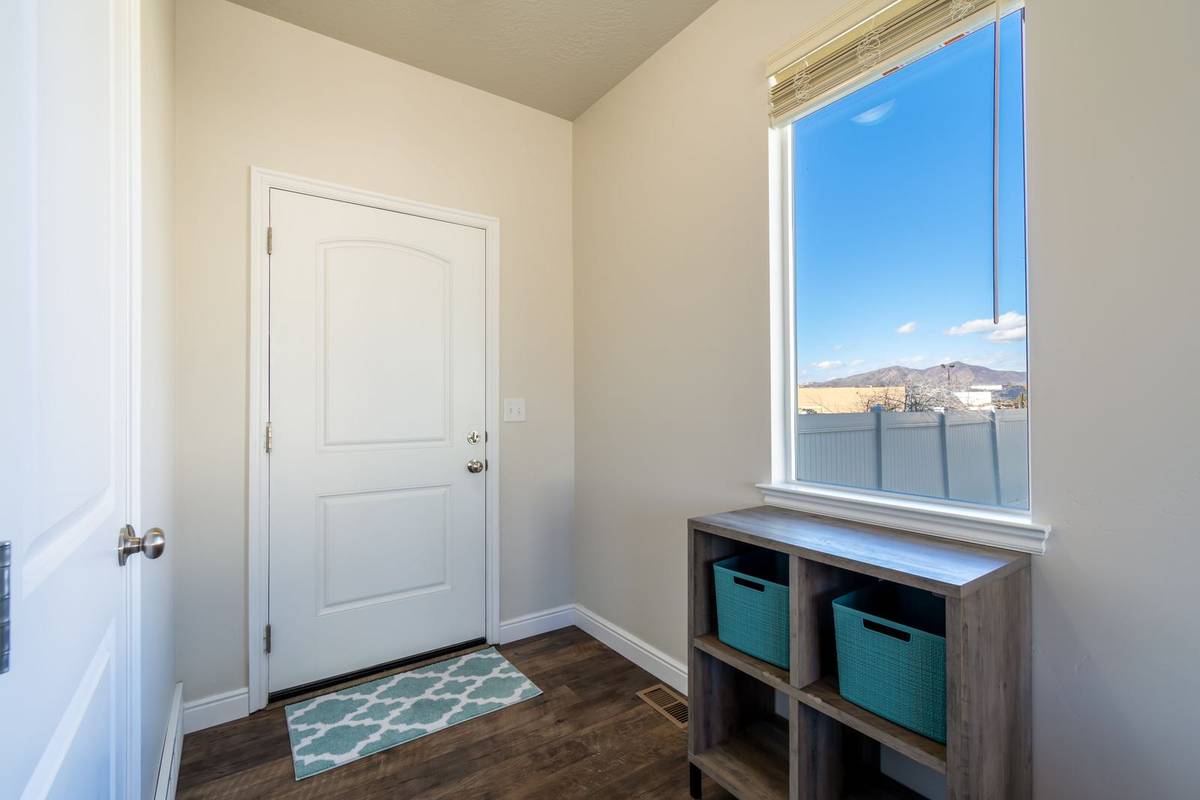
An entry too short for a runner takes a small rug instead, 2 × 3 ft or 3 × 5 ft. Before you buy, check the door. Where it swings over the rug, the rug and its pad together have to fit under its bottom edge, or the door will catch. If they don’t, keep the rug just clear of the swing.
A loose rug by the door is easy to trip on. Give it a non-slip backing or a rug pad, or hold it down with double-sided rug tape, so it can’t slide.
Try it with your room: Entryway Runner Size Calculator
9. Add a bench, and keep the path
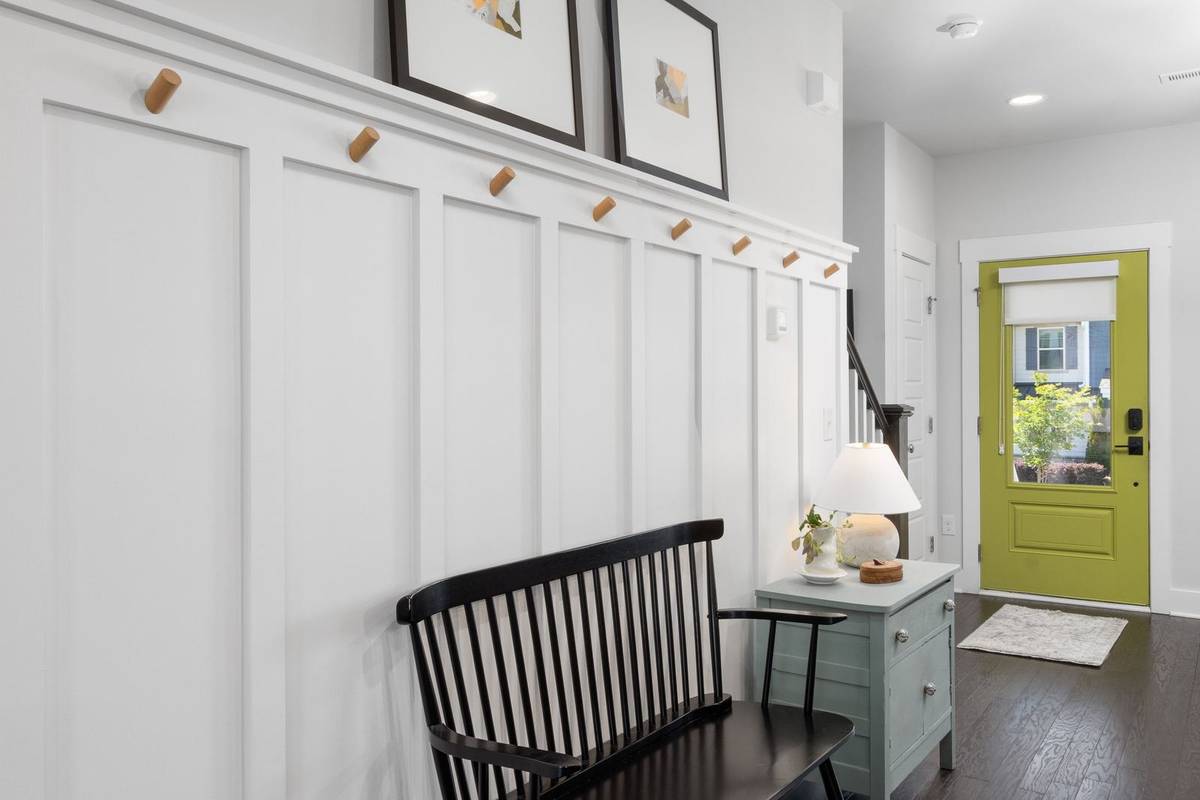
A bench gives you a place to sit down and pull off your shoes, and it takes floor the same way a console does. Leave 30 to 36 in of clear path in front of it, and measure from the front of the seat, not from the wall.
In a tight entry, the calculator’s console mode works for a bench too. Enter the wall and the space in front, and it gives the deepest piece that still leaves 36 in to walk past.
Try it with your room: Entryway Runner Size Calculator
10. Light the way in
An entry or hallway needs about 5 to 10 footcandles, less than the 10 to 20 footcandles of a living room. One footcandle is one lumen per square foot, so multiply the floor area by the footcandles to get the lumens the entry needs, and count every bulb in it toward that total.
Try it with your room: Room Lumens Calculator
11. Hang a foyer light you can walk under
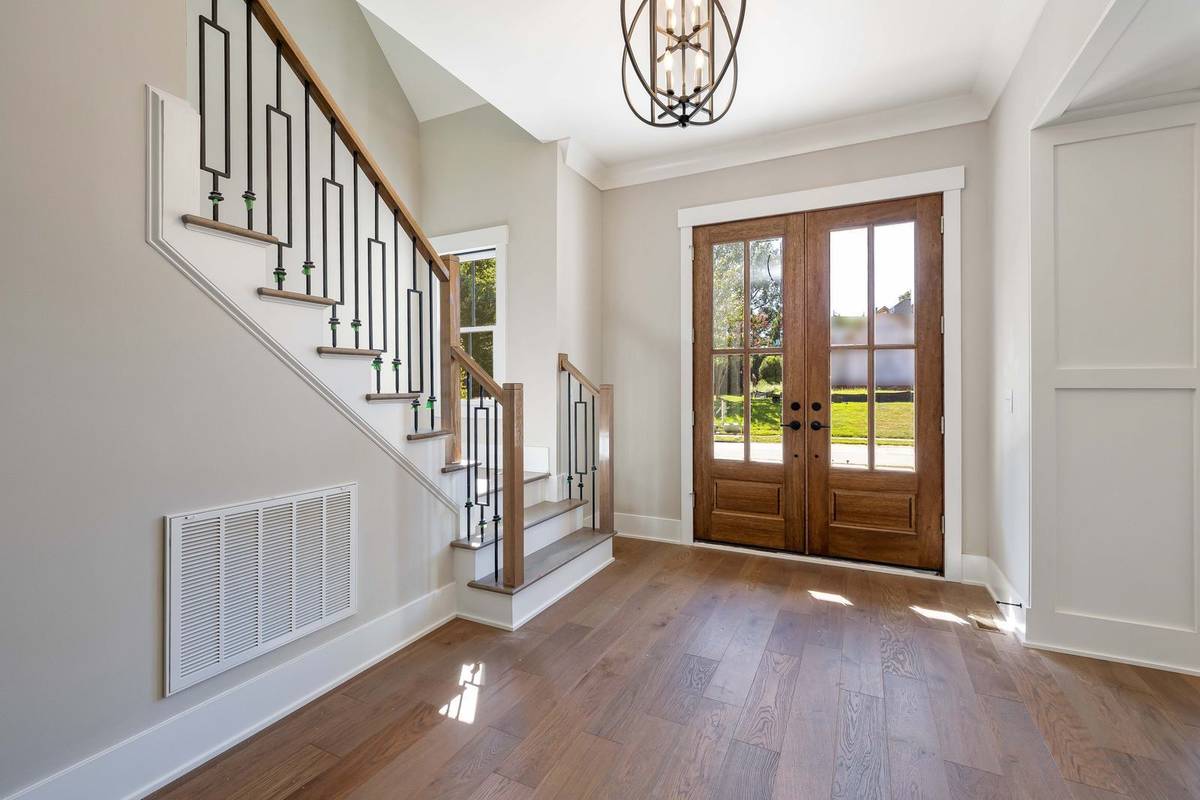
In a foyer, a pendant or chandelier hangs over the path, so keep its bottom at least 7 ft above the floor. Size it to the room: add the foyer’s length and width in feet, and use the total as the fixture’s width in inches.
Try it with your room: Chandelier Size Calculator
12. Hang art where it greets you
On an open entry wall, hang a single piece or a small group with its center at 57 to 60 in from the floor. Down a hallway, where you pass it standing up, the center can go a little higher, 60 to 66 in. When you can’t decide between two heights, go with the lower one.
Try it with your room: Picture Hanging Height Calculator
Every entryway calculator is on the Entryway page, and the wall art size calculator sizes the art for any other wall in the house.
Frequently asked questions
How much space do you need to walk past an entryway table?
About 36 in between the console and the wall or furniture across from it, and 30 in at the least. So the console can be as deep as the space in front of it minus 36 in: with 50 inches in front, up to 14 in deep.
How big should a console table be in an entryway?
About two-thirds as long as the wall it stands against, so about 48 in on a 6 foot wall. Most consoles stand 30 to 34 in high, and the walkway in front of it sets how deep it can be.
What size rug goes inside a front door?
A small entry takes a 2 × 3 ft or 3 × 5 ft rug. Check that the rug and its pad fit under the door where it swings over them, and give the rug a non-slip backing or pad so it can't slide.
How wide should a runner be in a narrow hallway?
Narrow enough to leave about 4 to 6 in of floor on each side, down to 3 in in a narrow hall. In a hall 36 inches wide, that's a runner 24 to 28 in wide, so a stock 2 ft 3 in runner.
What size mirror goes over an entry table?
About two-thirds to three-quarters as wide as the console: 32 to 36 in over a console 48 in long. Hang it with its bottom about 8 in above the top of the console.
Save it for later
Pin this page so it's handy when you're ready to buy.
Save to Pinterest (opens in a new tab)