11 TV Wall Ideas, With the Size and Height That Make Them Work
A TV wall works when the screen suits the room and hangs at the right height. Each idea below comes with its numbers and a link to the calculator that works them out for your room: from a sofa 9 ft away, for one, a 75 to 85 in TV fills your view.
By Nora Callahan · Updated

Measure two things before you plan the wall: the distance from your seat to the wall the TV will hang on, and your eye height when you sit there the way you usually watch. Then measure the wall itself, and note what will sit below the TV: a stand, a console, a dresser or a mantel.
The size comes from the distance, and the height comes from your eyes. Everything else on the wall, from the stand to the shelves at the sides, works around those two numbers.
1. Size the TV to the sofa’s distance
A TV looks right when the screen fills about 30° to 40° of your view from your seat. Measure from where your eyes will be to the wall, not from the front of the sofa. From 9 ft, that comes to a 75 to 85 in TV.
When two sizes both land in the range, the larger one gives the more immersive picture. A TV is sold by its diagonal, so the number on the box is the one to compare.
Try it with your room: TV Size Calculator
2. Hang it at eye level, lower than you might think
Mount the TV so the middle of the screen sits at your eye level when you’re seated: about 42 in from the floor on a sofa. Centered there, a 65 in screen runs from 26 in to 58 in off the floor.
That may be lower than you expect, and it’s the height where you look straight ahead at the picture. If you sit up straight on tall chairs, or the sofa is deep and low, measure your own eye height and use that number instead.
Try it with your room: TV Mounting Height Calculator
3. Set the seating inside the screen’s range
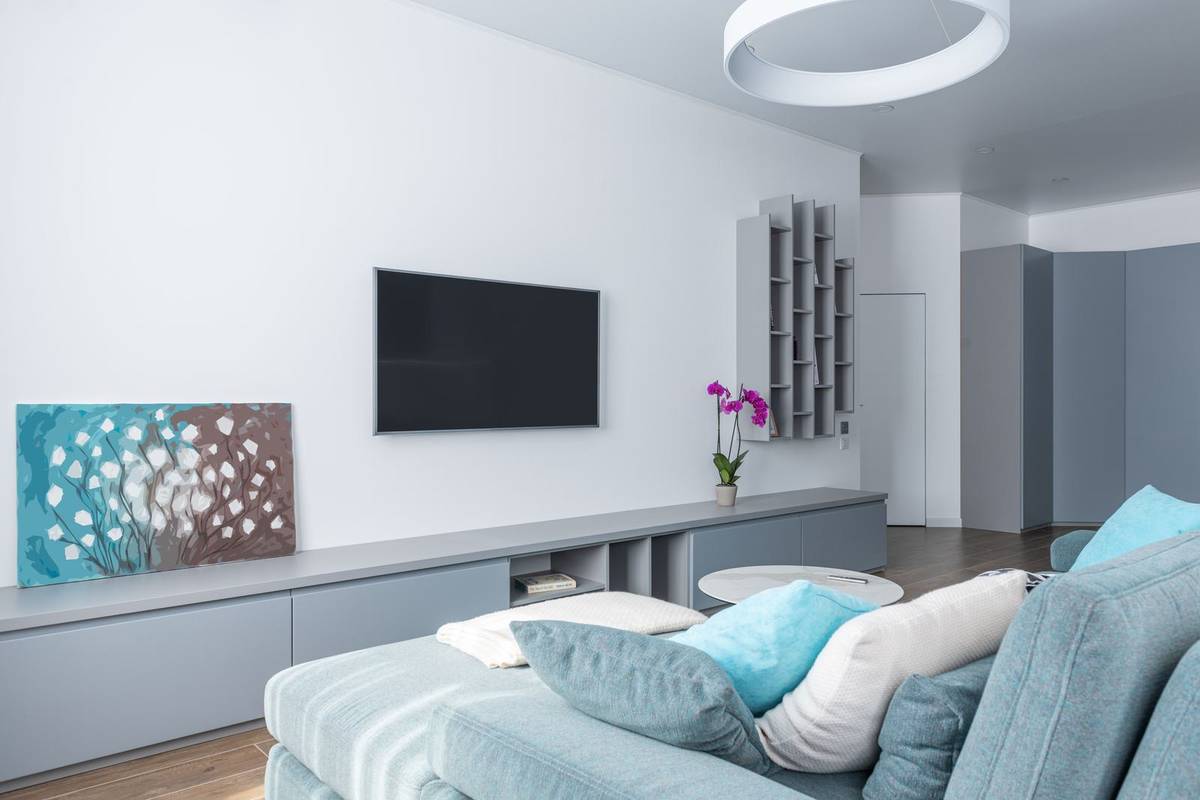
When the TV comes first, turn the rule around and place the sofa to suit it. A 55 in TV looks best from 5 ft 6 in to 7 ft 5 in away, a 65 in from 6 ft 6 in to 8 ft 9 in and a 75 in from 7 ft 6 in to 10 ft 1 in.
Put the sofa inside that band, measured to your eyes when you sit back. Closer seats get the more immersive view, and the farthest seat in the range still sees the screen fill 30°.
Worked example
Where to sit for a 65 in TV
What we know
- TV size: 65 in (the diagonal)
How it works out
- A 16:9 screen is about 0.872 times its diagonal wide, so a 65 in TV is 56.7 in wide.
- It fills 40° of your view from 77.8 in: the closest seat.
- It fills 30° from 105.7 in: the farthest seat.
Sit 6 ft 6 in to 8 ft 9 in from the screen.
Try it with your room: TV Size Calculator
4. Go smaller in a small living room
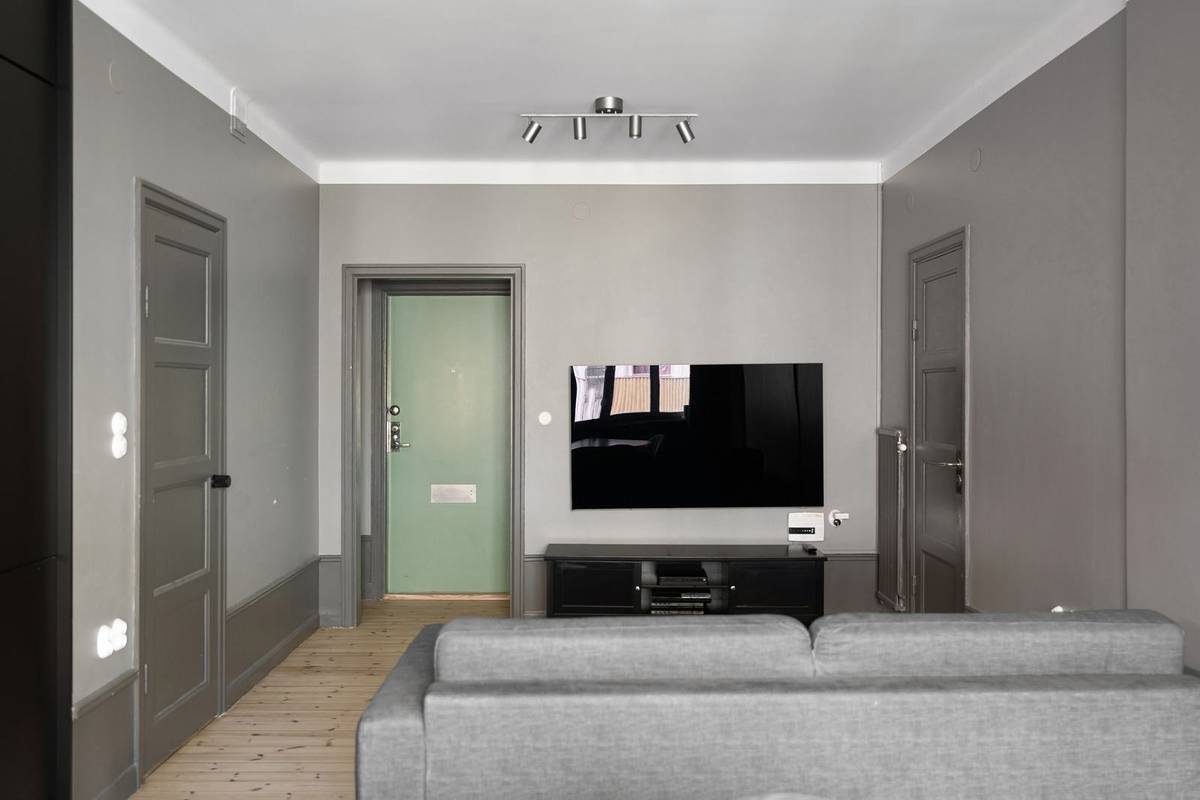
In a small room, the sofa often sits close to the TV wall. From 6 ft away, a 48 to 55 in TV fills the view. A much bigger screen would fill more than 40° of your view from there.
Mounting the TV frees the floor below it, and the stand, if you keep one, can be a slim one for the devices that plug into the TV.
Try it with your room: TV Size Calculator
5. Pick a stand wider than the TV
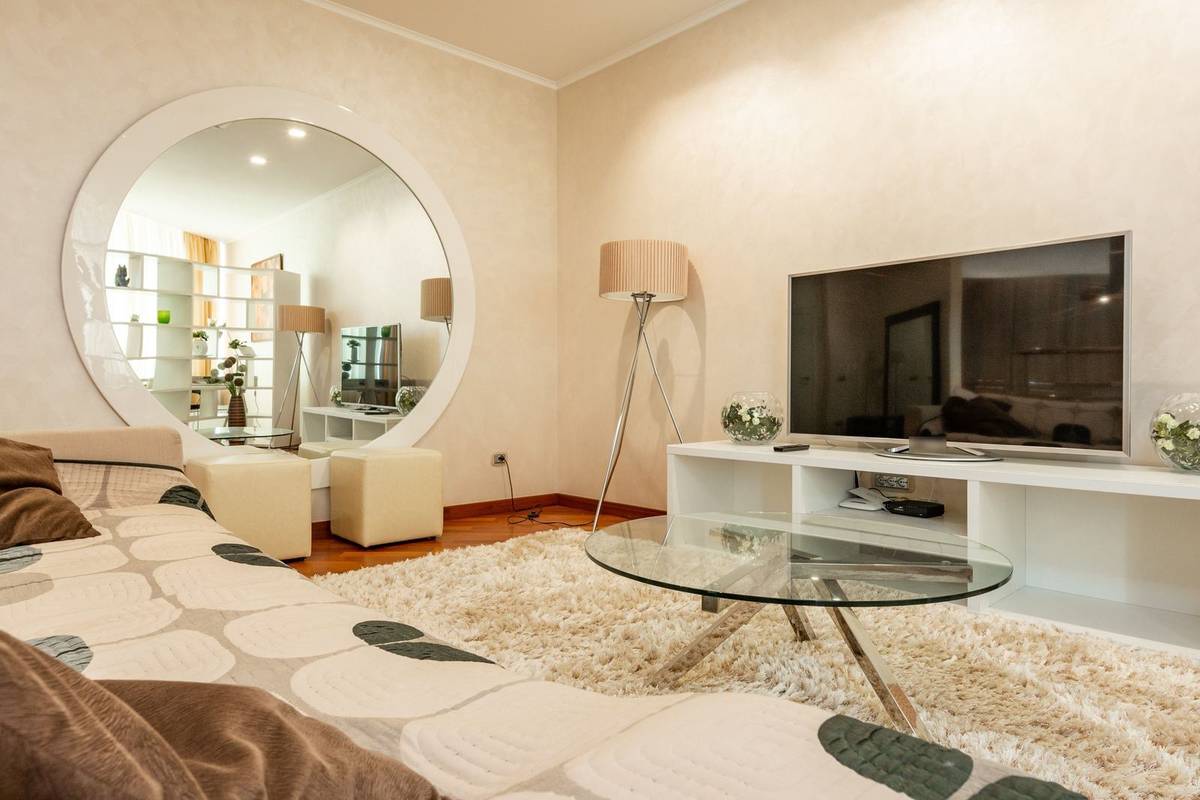
A TV’s size is its diagonal, so measure its width before you shop for a stand. A 65 in screen alone is about 57 in wide, and the frame adds a little more. Choose a stand a few inches wider than the TV on each side.
A stand as wide as the TV, or narrower, isn’t a safe base for it. The stand’s height matters too: the middle of the screen should still land at or just below your eye level, which puts the bottom of a 65 in screen at about 26 in from the floor.
Try it with your room: TV Mounting Height Calculator
6. Raise it over a bedroom dresser
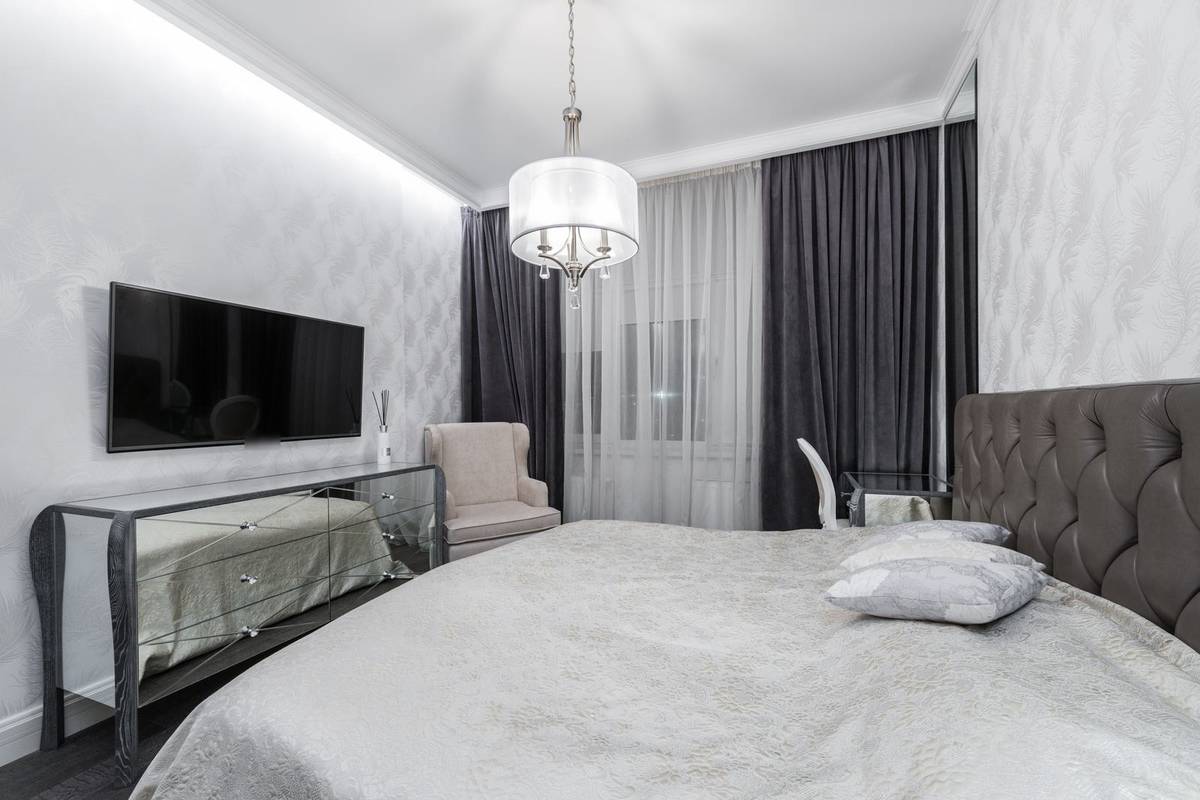
In a bedroom, the TV often hangs over a dresser, so it has to clear the top. You also watch from higher up. Measure your eye height sitting up against the pillows, the way you watch, and measure from your eyes to the wall.
Worked example
A 55 in TV over a bedroom dresser
What we know
- Eye height when seated: 48 in
- TV size: 55 in
- Viewing distance: 10 ft
- Lowest spot for the bottom of the TV: 40 in
How it works out
- A 16:9 screen is about 0.49 times its diagonal tall, so a 55 in screen is 27 in tall: 13.5 in above and below its center.
- At eye level the bottom of the screen would be at 34.5 in, under the 40 in limit, so the center goes up to 40 in + 13.5 in = 53.5 in.
- From 10 ft, that center is 3° above your eye level (the guideline is 15° at most) and the top is 9° up (35° at most).
- The screen runs from 40 in to 67 in off the floor.
Mount the TV with its center 53.5 in from the floor.
The calculator raises the TV just enough to clear the lowest spot you give it, the dresser’s top plus a small gap, and checks the angle from the bed. When the TV ends up well above your eyes, a tilting mount angles the screen down toward you.
Try it with your room: TV Mounting Height Calculator
7. Check the angle above a fireplace
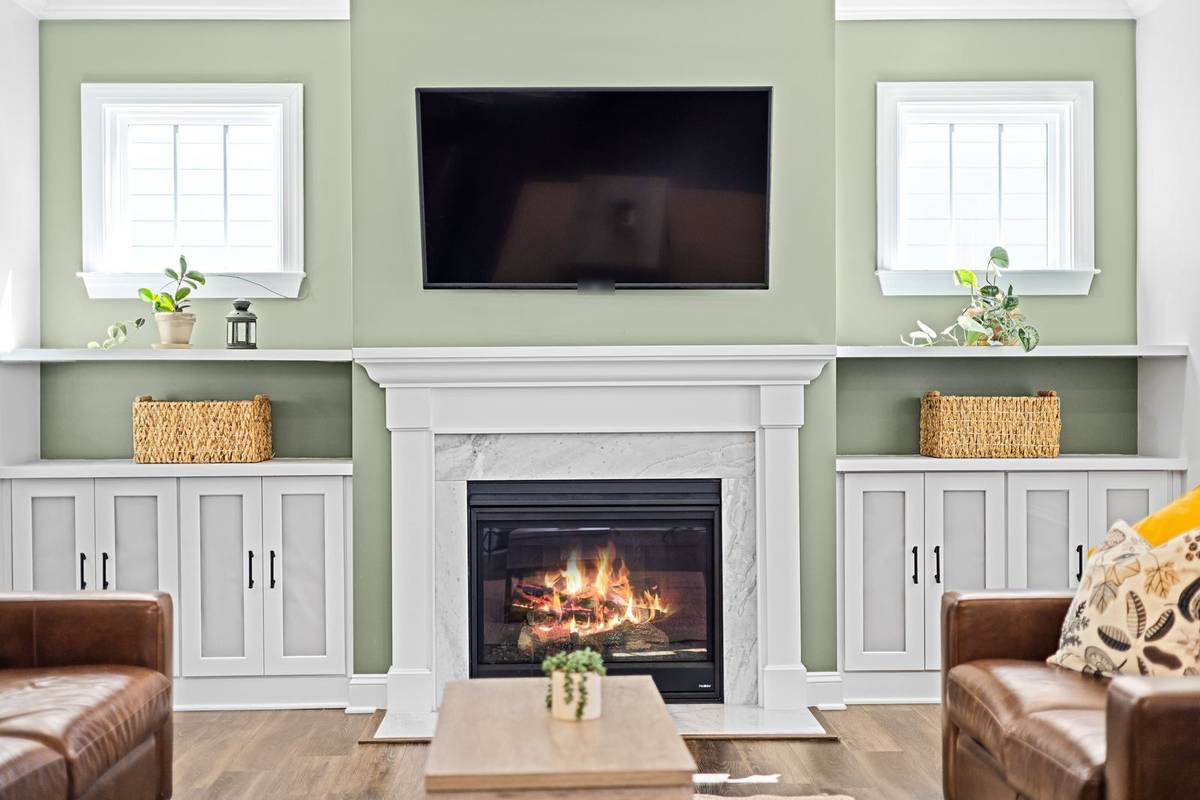
Over a mantel, the TV goes where the mantel lets it, which is usually well above eye level. In the drawing below, a 65 in TV with its bottom at 56 in has its center at 72 in and its top at 88 in.
The farther back you sit, the higher the TV can go before you look up more than 15° to the middle of the picture. At an eye height of 42 in, the center can go up to 71 in from 9 ft and 80.5 in from 12 ft. Above that, a tilting mount helps.
Check your TV’s manual before you hang it over a fireplace. Its maker may say not to place it over a fireplace or near another heat source, such as a radiator.
Try it with your room: TV Mounting Height Calculator
8. Put the TV beside the fireplace instead
When the mantel puts the screen too high, or the TV’s manual rules out the spot above it, hang the TV on the wall beside the fireplace. There it can sit at eye level, with its center about 42 in from the floor, and away from the heat.
The fireplace and the TV then share one wall, so arrange the seating to face both. Measure the distance from the sofa to the TV’s spot, not to the fireplace, when you choose the size.
Try it with your room: TV Mounting Height Calculator
9. Paint an accent wall behind the TV
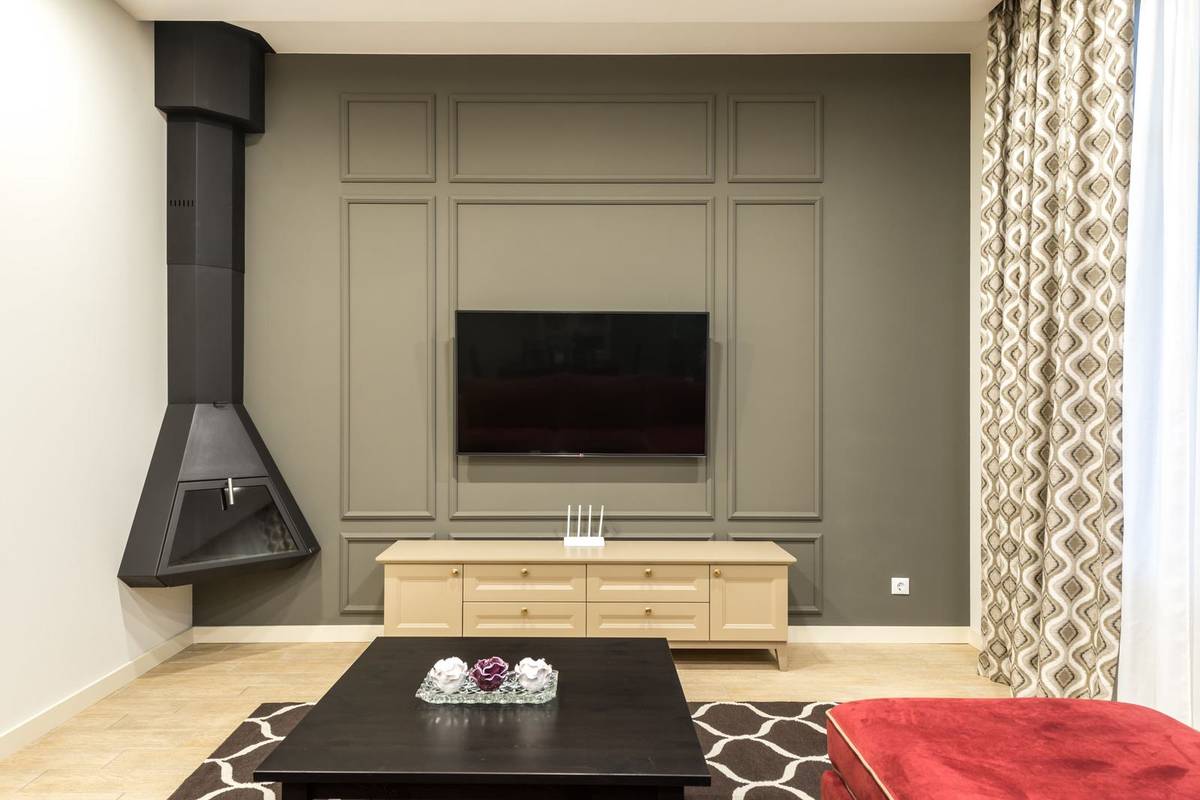
An accent wall gives the TV wall its own color, deeper than the rest of the room, so the screen, the stand and the wall read as one. One wall takes little paint. A 12 ft wall with an 8 ft ceiling needs about 1 gallon for two coats.
A dark color goes on over a tinted primer, which takes about 2 quarts for the same wall. Paint before you mount the TV, so the wall behind it is finished.
Try it with your room: Paint Calculator
10. Frame the TV with shelves or art
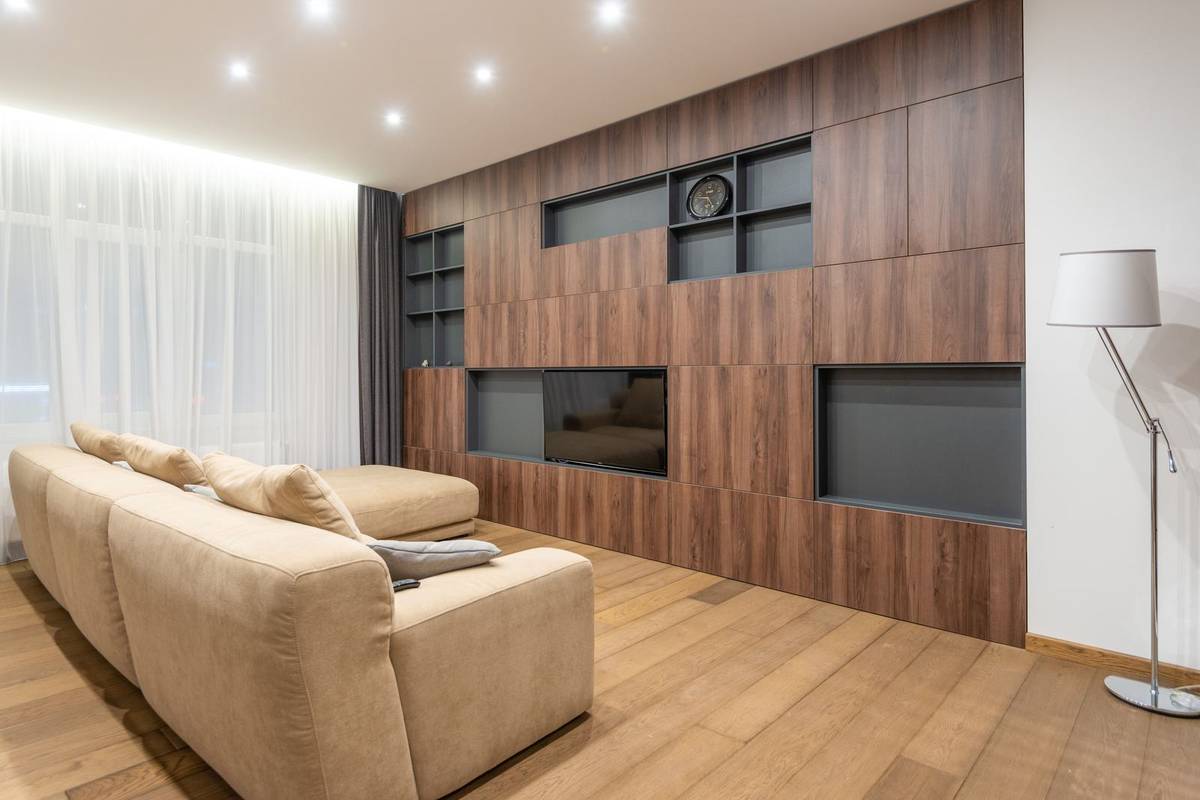
Shelves or built-in cabinets on each side turn the TV into part of a media wall. Measure the open wall left at each side of the screen, and size what goes there to that space. Art looks right at about two-thirds to three-quarters of the open wall’s width, which comes to 24 to 27 in on 36 in of wall.
For a full group of frames around the screen, the gallery wall ideas show how to build one with the TV as its center.
Try it with your room: Wall Art Size Calculator
11. Tape an outline before you drill
Cut a paper or cardboard outline the size of the TV and tape it to the wall at the height you chose. A 65 in screen is about 57 in wide and 32 in tall, plus its frame. Sit in your usual spot and look at it for a few minutes, and if you tip your head back to see the middle, try lower.
Then find the TV’s mounting holes. On many TVs they aren’t at the center, so measure from the top edge of the TV to the holes and line the mount up as its instructions say.
Fasten the mount into wood studs or solid masonry with its own hardware, never into drywall alone, and follow the mount maker’s instructions exactly: a TV that isn’t mounted correctly can slide or fall. Check that the mount fits your TV’s mounting pattern and weight, and have two people lift the TV onto the wall, four for a TV of 82 in or larger.
Try it with your room: TV Mounting Height Calculator
Every living room calculator is on the Living Room page, and the TV size and mounting height calculators work from your own sofa.
Frequently asked questions
What size TV should go on a living room wall?
The one that fills about 30° to 40° of your view from the sofa. Measure from your eyes to the wall: from 9 ft, that's a 75 to 85 in TV, and from closer, a smaller one.
How high should a TV be mounted on the wall?
With the middle of the screen at your eye level when you sit, about 42 in from the floor for most sofas. Centered there, a 65 in screen runs from about 26 in to 58 in off the floor.
Is it OK to mount a TV above a fireplace?
Check the TV's manual first: its maker may say not to place it over a fireplace or near another heat source. Over a mantel the TV also sits well above eye level, so sit far enough back that the middle of the screen is no more than 15° above your eyes, or put the TV beside the fireplace instead.
How wide should a TV stand be?
A few inches wider than the TV on each side. Measure the TV's actual width, not its size: a 65 in screen alone is about 57 in wide, and the frame adds a little more.
Save it for later
Pin this page so it's handy when you're ready to buy.
Save to Pinterest (opens in a new tab)