Nursery Checklist Generator
Answer five questions about where the baby will sleep, the first bed, diaper changes, feeding and diapers, and get a nursery checklist with a note on each item, where things go and what to leave out of the sleep space. Tick items off as you get them, then print the list.
By Nora Callahan · Updated
Tell us about your plans
Your nursery checklist
A bassinet in your room, then a crib
17 things to have ready before the baby comes, 3 for when the baby moves to the crib, and 12 optional.
Tick items as you get them: 0 of 17 things to have ready so far.
Sleep
Diapering
Feeding
Clothes and storage
Light, sound and air
Safety
Where things go
- Put the bassinet in your room, near your bed but not in it, for at least the first 6 months, as the AAP and Safe to Sleep advise. The changing station, the dresser and the chair can go in the nursery from the start.
- Keep the bassinet, and later the crib, away from windows and from blind and curtain cords.
- Keep every cord, the monitor's included, at least 3 ft from any side of the bassinet.
- Keep anything that can burn, the bedding and curtains included, at least 3 ft from radiators, space heaters and other heat sources.
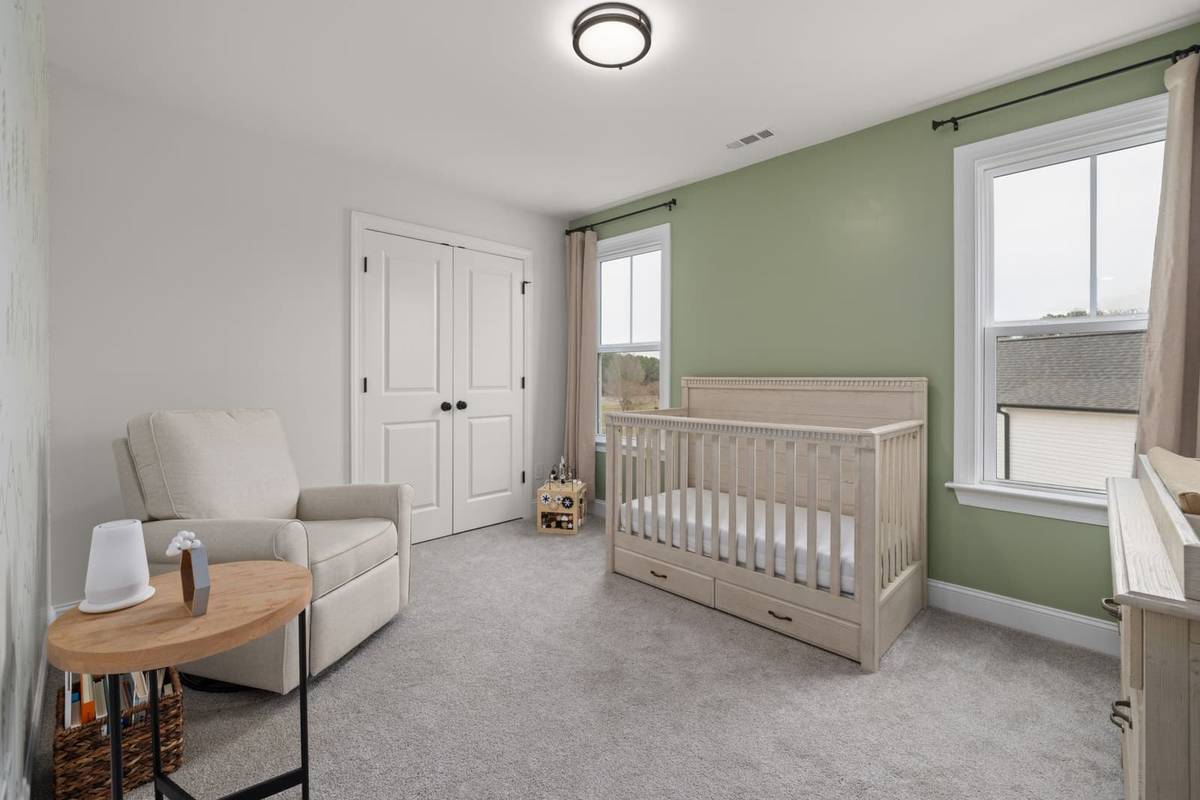
- Put the changing station near the crib and the chair in a quiet corner with the side table beside it, and leave open floor for play later.
As the baby grows
- At the first signs of rolling, usually 3 to 4 months
- Stop swaddling.
- At about 5 months, or once the baby pushes up on hands and knees
- Move the baby from the bassinet to the crib, sooner at the maker's weight limit.
- At 5 months, or on hands and knees, whichever comes first
- Take down a mobile, if there is one.
- After the first 6 months at the earliest
- Move the baby's bed to the nursery.
- Before the baby can sit up
- Lower the crib mattress.
- Before the baby can stand
- Set the crib mattress at its lowest.
- At 35 in tall, or once the baby can climb out
- Move to a bed.
Leave out of the sleep space
- Crib bumpers, padded or vinyl, and slat covers: banned since November 12, 2022.
- Pillows, blankets, quilts, comforters and mattress toppers.
- Soft toys and loveys.
- Sleep positioners and wedges.
- Inclined sleepers, anything that tilts more than 10 degrees, and seats, swings or nursing pillows for sleep.
- Weighted sleep sacks, swaddles and blankets.
- Home breathing or heart-rate monitors sold to lower the risk of SIDS: there's no evidence they do.
A planning list, not medical advice: follow each product's instructions and your baby's doctor. How the checklist works
Nothing you enter leaves this device. Once you change something or tick an item, it's kept on this device until you press Clear.
The short answer
A nursery needs four things before the baby comes: a safe place to sleep, a place to change diapers, a chair for feeding and somewhere to keep clothes, plus the safety basics every home with a baby needs, a smoke alarm, furniture anchors and outlet covers. The sleep space comes first, and it’s simple: a crib, bassinet or play yard that meets the federal standard, a firm, flat mattress and a fitted sheet, with nothing else in it. The AAP advises keeping it in your room, near your bed but not in it, for at least the first 6 months.
The checklist above is a sample, a bassinet in your room with a changing pad on a dresser: 17 things to have ready before the baby comes, 3 for when the baby moves to the crib, and 12 optional. Change the answers to make it yours, tick items off as you get them and download the PDF.
How to use the generator
- Say where the baby sleeps first, and in what: your room or the nursery, and a bassinet, a play yard or a crib. With a bassinet or play yard, the crib and its bedding move to “later”.
- Pick the changing setup, feeding and diapers. A changing pad on a dresser saves floor space; a changing table adds a piece of furniture. Feeding decides the bottles, formula, pump and nursing pillow on the list.
- Read the checklist. Items come grouped by area, each with a note on what to look for. “Later” marks what you need once the baby moves to the crib, and “Optional” what’s nice to have but easy to skip.
- Tick items off as you get them. The count at the top keeps track of the things to have ready.
- Take it with you. Download PDF gives you the checklist with boxes to tick, Copy checklist puts it on your clipboard, and Print prints the page.
Nothing you enter leaves your device. Once you change something or tick an item, your choices and ticks are kept in this browser until you press Clear.
How the checklist works
- The sleep space first. Every list starts with the baby’s first bed, its mattress and fitted sheets, and sleep sacks instead of blankets, because that’s where the safety rules are strictest.
- Needed, later or optional. Needed items are the core of any nursery: a safe sleep setup, a changing area, a feeding chair, storage and the safety basics. The crib is “later” when the first bed is a bassinet or play yard. Optional items are nice to have and easy to skip, like a sound machine, a humidifier or a monitor.
- Safety first. The safety notes follow the AAP’s safe sleep rules and the federal product standards.
- Counts where they help. Plan on 3 to 4 fitted crib sheets and about 10 to 11 disposable diapers a day for the first weeks, or 48 cloth diapers with 3 to 5 covers. The other items have no set count.
The list is a guide for planning, not a shopping rule: a nursery with fewer things is fine as long as the sleep space is safe.
The sleep space
The AAP’s safe sleep rules for where a baby sleeps are short:
- On the back, on a firm, flat, level surface. Firm means it doesn’t dent under the baby, and any surface tilted more than 10 degrees isn’t safe for sleep.
- In a product made for sleep: a crib, bassinet, play yard or bedside sleeper that meets the federal standard. In-bed sleepers, baby nests and travel bassinets have to meet federal sleep standards too.
- Bare is best: nothing in the sleep space but a fitted sheet. No pillows, blankets, bumpers, positioners, soft toys or weighted items.
- A wearable blanket instead of a loose one. Dress the baby in one layer more than you wear, and check for sweating, a hot chest or flushed skin, signs of overheating.
- A pacifier at naps and bedtime once the baby is feeding well, or once breastfeeding is well established, never on a clip or a cord.
- Smoke- and vape-free, during pregnancy and around the baby.
- Off the couch and out of the car seat. If the baby falls asleep in a car seat, swing or carrier, or on a couch or armchair, move them to their own bed.
Cribs, mattresses, bassinets and play yards
- Cribs. Full-size cribs have had to meet the federal standard since June 28, 2011, which banned drop sides, so choose a crib made after that date. Slats no more than 2 3/8 in apart, about the width of a soda can, none missing or cracked, and corner posts no taller than 1/16 in. The inside of a full-size crib measures 28 × 52 3/8 in, give or take 5/8 in.
- Crib mattresses. At least 27 1/4 × 51 5/8 in under the federal rule, firm and tight-fitting. If more than 2 fingers fit between the mattress and the crib’s side, don’t use them together. Throw away a new mattress’s plastic wrapping.
- Bassinets. They meet their own federal standard and aren’t meant for use beyond about 5 months, or once the baby can push up on hands and knees, the CPSC says. Makers set weight limits too, and some end use when the baby starts to roll, so check the label and stop at whichever comes first.
- Bedside sleepers attach to your bed and meet a federal standard of their own.
- Play yards are for a child under 35 in tall who can’t climb out. Use only the mattress that came with it, or one that names its brand and model. Never add padding or stack mattresses.
- Changing tables need a guardrail of 2 in on all four sides and a concave pad. A contoured pad on a dresser falls under the same federal standard as changing tables. Either way, buckle the strap, keep a hand on the baby and never step away.
As the baby grows
The setup changes as the baby grows. The generator lists the changes for your choices; for a bassinet in your room, they run like this:
| When | What to do |
|---|---|
| At the first signs of rolling, usually 3 to 4 months | Stop swaddling. |
| At about 5 months, or once the baby pushes up on hands and knees | Move the baby from the bassinet to the crib, sooner at the maker's weight limit. |
| At 5 months, or on hands and knees, whichever comes first | Take down a mobile, if there is one. |
| After the first 6 months at the earliest | Move the baby's bed to the nursery. |
| Before the baby can sit up | Lower the crib mattress. |
| Before the baby can stand | Set the crib mattress at its lowest. |
| At 35 in tall, or once the baby can climb out | Move to a bed. |
Where things go
- Your room first. Room sharing, with the baby’s bed near yours but not in it, is safer than bed sharing and safer than a room of their own. The changing station, dresser and chair can go in the nursery from the start.
- Away from windows and cords. Keep the crib away from windows and from blind and curtain cords, and choose cordless window coverings: the CPSC recommends them in every home with children. The curtain size calculator sizes the panels and the rod, and the blind size calculator the blinds or shades.
- 3 ft from cords. Keep every cord, the baby monitor’s included, at least 3 ft from any part of the crib, bassinet or play yard, and never put a monitor on or in the crib. The plan in the generator shows that zone around the bed.
- 3 ft from heat. Keep anything that can burn at least 3 ft from radiators and space heaters, and turn space heaters off at bedtime. Use only cool night-lights, away from curtains and bedding.
- Anchored furniture. Anchor dressers, bookcases and TVs to the wall. Dressers made after September 1, 2023 must meet the federal stability rule and come with an anti-tip kit.
- Alarms. A smoke alarm in every bedroom, outside each sleeping area and on every level, tested monthly and replaced every 10 years. A carbon monoxide alarm outside each sleeping area and on every level.
- The rest of the room. Put the changing station near the crib with supplies in your reach and out of the baby’s, and the chair in a quiet corner with a small table beside it. A sound machine goes across the room from the bed at a low volume: turned up, one can top 50 dB, the noise limit for hospital nurseries, at 30 cm.
Nursery safety by the numbers
| What | The rule |
|---|---|
| Room sharing | At least the first 6 months |
| Crib slats | No more than 2 3/8 in apart |
| Crib corner posts | No taller than 1/16 in |
| Crib mattress | At least 27 1/4 × 51 5/8 in |
| Gap at the mattress | No more than 2 fingers |
| Cords | At least 3 ft from the bed |
| Heat sources | At least 3 ft from anything that burns |
| Changing table rails | 2 in on all four sides |
| Sleep surface tilt | 10 degrees at most |
| Smoke alarms | Replaced every 10 years |
Nursery furniture sizes
Measure the room before you buy the big pieces. Sizes vary from model to model, so check the one you choose:
| Piece | Size | Floor space |
|---|---|---|
| Full-size crib | 53 3/4 to 55 × 28 1/2 to 29 3/4 in | 10.7 to 11.1 sq ft |
| Bassinet (base) | 32 3/4 × 32 3/4 in | 7.4 sq ft |
| Play yard | 39 1/2 to 43 1/2 × 28 1/4 to 30 1/2 in | 7.7 to 9.2 sq ft |
| Changing table | 34 1/4 to 35 1/4 × 20 3/4 to 21 1/2 in | 4.9 to 5.3 sq ft |
| Changer dresser | 40 3/4 × 19 in | 5.4 sq ft |
| Glider | 38 1/4 × 36 in (64 in reclined) | 9.6 sq ft |
Full-size cribs run 53 3/4 to 55 in long and 28 1/2 to 29 3/4 in deep on the outside. A glider needs more floor when it reclines, about 64 in fully reclined. For the rest of the room, the rug size calculator sizes a rug and the room lumens calculator works out how much light the room needs.
What to leave out of the sleep space
The checklist ends with the same list.
- Crib bumpers, padded or vinyl, and slat covers: banned since November 12, 2022.
- Pillows, blankets, quilts, comforters and mattress toppers.
- Soft toys and loveys.
- Sleep positioners and wedges.
- Inclined sleepers, anything that tilts more than 10 degrees, and seats, swings or nursing pillows for sleep.
- Weighted sleep sacks, swaddles and blankets.
- Home breathing or heart-rate monitors sold to lower the risk of SIDS: there's no evidence they do.
Worked examples
Worked example
A bassinet in your room, then a crib
What we know
- Sleeps first: your room, in a bassinet
- Diaper changes on: a pad on a dresser
- Feeding: both; diapers: disposable
How it works out
- Sleep: bassinet, fitted bassinet sheets and wearable blankets or sleep sacks; later, full-size crib, firm crib mattress and fitted crib sheets; optional, swaddles for the first weeks and pacifiers.
- Diapering: contoured changing pad for the dresser top, disposable diapers, wipes and diaper rash cream and diaper pail.
- Feeding: glider or rocking chair, burp cloths, bottles and a bottle brush and infant formula; optional, small side table, nursing pillow and breast pump and milk storage bags.
- Clothes and storage: dresser, also the changing station; optional, baskets and bins and laundry hamper.
- Light, sound and air: cordless window coverings; optional, night-light, sound machine, humidifier and room thermometer.
- Safety: smoke alarm in the room, carbon monoxide alarm, furniture anchors and outlet covers; optional, audio or video baby monitor.
A bassinet in your room, then a crib: 17 things to have ready before the baby comes, 3 for when the baby moves to the crib, and 12 optional.
Worked example
A crib from day one, a changing table and cloth diapers
What we know
- Sleeps first: your room, in a crib
- Diaper changes on: a changing table
- Feeding: breastfeeding; diapers: cloth
How it works out
- Sleep: full-size crib, firm crib mattress, fitted crib sheets and wearable blankets or sleep sacks; optional, swaddles for the first weeks and pacifiers.
- Diapering: changing table, changing pad with a strap, cloth diapers, wipes and diaper rash cream and diaper pail.
- Feeding: glider or rocking chair and burp cloths; optional, small side table, nursing pillow, breast pump and milk storage bags and bottles and a bottle brush.
- Clothes and storage: dresser; optional, baskets and bins and laundry hamper.
- Light, sound and air: cordless window coverings; optional, night-light, sound machine, humidifier and room thermometer.
- Safety: smoke alarm in the room, carbon monoxide alarm, furniture anchors and outlet covers; optional, audio or video baby monitor.
A crib in your room: 17 things to have ready before the baby comes, and 13 optional.
Worked example
A play yard, a dresser and formula
What we know
- Sleeps first: your room, in a play yard
- Diaper changes on: a pad on a dresser
- Feeding: formula; diapers: disposable
How it works out
- Sleep: play yard, fitted play yard sheets and wearable blankets or sleep sacks; later, full-size crib, firm crib mattress and fitted crib sheets; optional, swaddles for the first weeks and pacifiers.
- Diapering: contoured changing pad for the dresser top, disposable diapers, wipes and diaper rash cream and diaper pail.
- Feeding: glider or rocking chair, burp cloths, bottles and a bottle brush and infant formula; optional, small side table.
- Clothes and storage: dresser, also the changing station; optional, baskets and bins and laundry hamper.
- Light, sound and air: cordless window coverings; optional, night-light, sound machine, humidifier and room thermometer.
- Safety: smoke alarm in the room, carbon monoxide alarm, furniture anchors and outlet covers; optional, audio or video baby monitor.
A play yard in your room, then a crib: 17 things to have ready before the baby comes, 3 for when the baby moves to the crib, and 10 optional.
Once the list is settled, pick the room’s colors with the room color palette generator and work out the paint with the paint calculator.
This checklist is a planning aid, not medical advice. Follow the instructions that come with each product, check for recalls, and ask your baby’s doctor about anything specific to your baby, such as sleep, feeding or a health condition.
Frequently asked questions
What do you need in a nursery before the baby comes?
A safe place to sleep, a place to change diapers, a chair for feeding and somewhere to keep clothes, plus a smoke alarm, furniture anchors and outlet covers. The sample checklist, a bassinet in your room with a changing pad on a dresser, has 17 things to have ready, 3 for when the baby moves to the crib and 12 optional extras.
Does a newborn need a crib right away?
No. The AAP advises room sharing for at least the first 6 months, with the baby on their own sleep surface near your bed: a crib, a bassinet or a play yard that meets the federal standard. Many families start with a bassinet, which isn't meant for use beyond about 5 months or once the baby can push up on hands and knees, then move to a crib.
What size mattress fits a standard crib?
A full-size crib mattress must be at least 27 1/4 × 51 5/8 in under the federal rule, and the inside of a full-size crib measures 28 × 52 3/8 in, give or take 5/8 in. Check the fit in the crib itself: if more than 2 fingers fit between the mattress and the side, don't use them together.
How far should a baby monitor be from the crib?
At least 3 ft, the monitor and its cord, from any part of the crib, bassinet or play yard, and never on or in the crib, the CPSC says. That goes for wall-mounted cameras too: a child has reached the cord of a camera mounted on the wall.
Are crib bumpers safe?
No. Crib bumpers, including padded bumpers, vinyl bumper guards and slat covers, have been banned in the US since November 12, 2022 under the Safe Sleep for Babies Act. They can raise the risk of suffocation and wedging, so the sleep space should hold nothing but a fitted sheet.
When should you lower the crib mattress?
Before the baby can sit up, and to its lowest setting before the baby can stand. Take down a mobile at 5 months or once the baby gets up on hands and knees, whichever comes first, and move the child to a bed at 35 in tall, or sooner once they can climb out.
Does the generator keep my checklist?
Only on your device. Nothing you enter is sent anywhere: the checklist and the PDF are made in your browser. Once you change something or tick an item, your choices and ticks stay in this browser so they're there when you come back, and the Clear button deletes them.
Next step
Room Color Palette GeneratorStart from one color you love, on a paint chip, your sofa or a pillow, and get a 60-30-10 palette for the walls, the big pieces and the accents, drawn in a sketch of your room. Then print the palette card.
Save it for later
Pin this page so it's handy when you're ready to buy.
Save to Pinterest (opens in a new tab)