12 Nursery Ideas, With the Sizes and Safety Rules That Make Them Work
A nursery works when it's safe first and cozy second. Each idea below comes with its numbers and a link to the tool that works them out for your room: the crib, for one, holds nothing but a fitted sheet and stands at least 3 ft from every cord.
By Nora Callahan · Updated

Measure the room before you buy the big pieces: wall to wall, the windows, the door swing and the closet, and where the outlets, vents and radiators are. Then plan the sleep space first, because that’s where the safety rules are strictest. The changing station, the chair and the storage fit around it.
1. Keep the crib bare
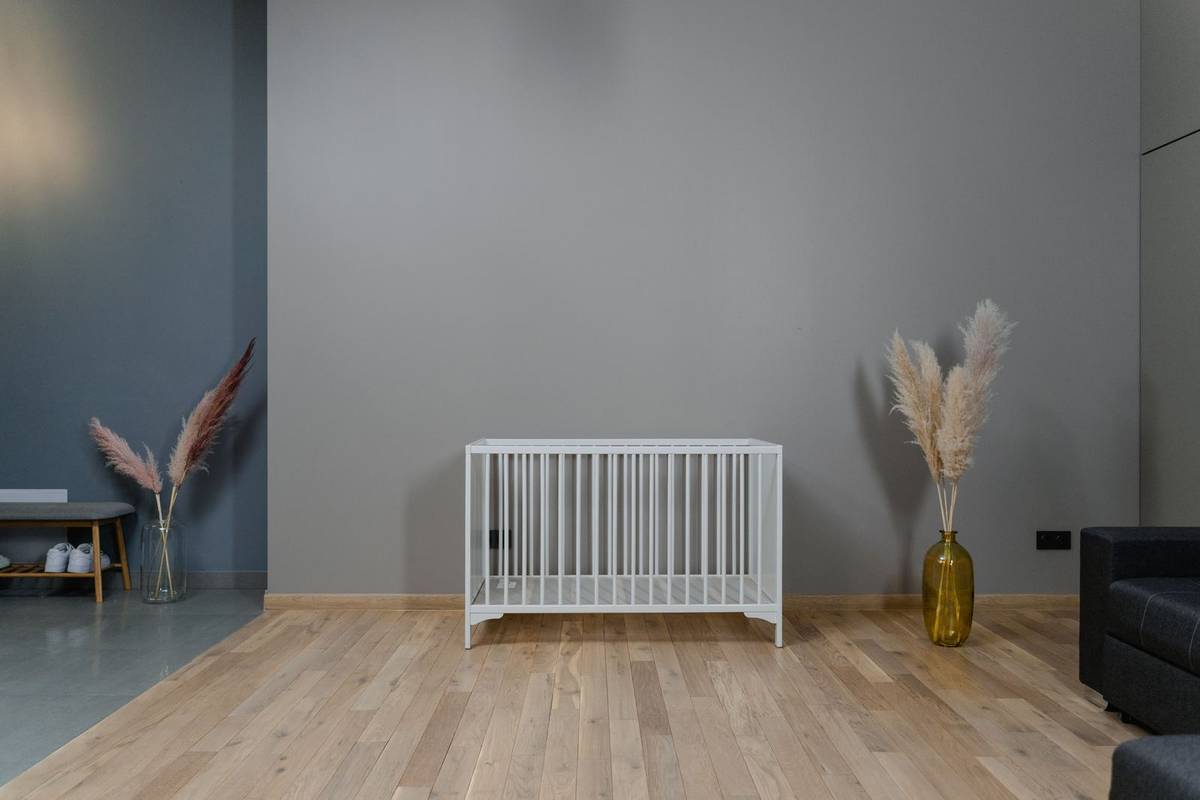
A crib needs three things: a frame that meets the federal standard, a firm mattress that fits it, and a fitted sheet. Choose a crib made after June 28, 2011, when the standard banned drop sides, with slats no more than 2 3/8 in apart and corner posts no taller than 1/16 in.
The mattress should be at least 27 1/4 × 51 5/8 in and firm enough not to dent under the baby. If more than 2 fingers fit between the mattress and the crib’s side, don’t use them together.
Leave everything else out: no bumpers (banned since November 12, 2022), pillows, blankets, positioners or soft toys. A crib with only a fitted sheet may look bare, but it’s the safest setup, and a wearable blanket keeps the baby warm instead of a loose one.
Try it with your room: Nursery Checklist Generator
2. Start with a bassinet in your room
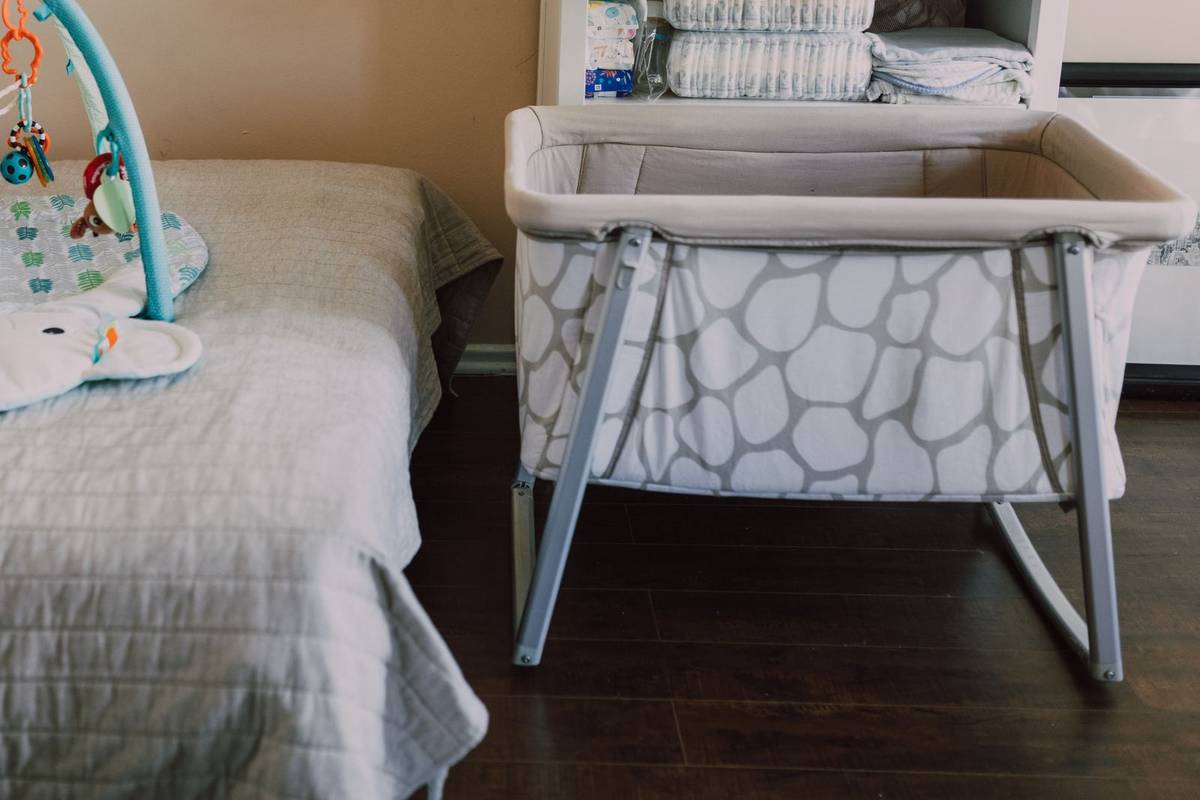
The AAP and Safe to Sleep advise room sharing for at least the first 6 months: the baby’s own bed in your room, near your bed but not in it. A bassinet suits that well, since its base takes about 32 3/4 × 32 3/4 in of floor.
A bassinet isn’t meant for use beyond about 5 months, or once the baby can push up on hands and knees, so the crib can wait a few months. Meanwhile the nursery can hold the changing station, the dresser and the chair from the start.
Try it with your room: Nursery Checklist Generator
3. Give the crib a safe spot
Put the crib against a solid wall, away from windows and from blind and curtain cords. Keep every cord, a baby monitor’s included, at least 3 ft from any side of the crib. Keep anything that can burn at least 3 ft from radiators and space heaters, bedding and curtains included.
With that zone on its open sides, a crib against a wall claims about 127 × 65 in of floor, as in the plan. Cords and heaters stay outside it.
A mobile, if you hang one, attaches securely to the rails, the wall or the ceiling, high enough that the baby can’t reach it. Take it down at 5 months or once the baby gets up on hands and knees, whichever comes first.
Try it with your room: Nursery Checklist Generator
4. Measure a small nursery for the big pieces
| Piece | Size | Floor space |
|---|---|---|
| Full-size crib | 53 3/4 to 55 × 28 1/2 to 29 3/4 in | 10.7 to 11.1 sq ft |
| Bassinet (base) | 32 3/4 × 32 3/4 in | 7.4 sq ft |
| Play yard | 39 1/2 to 43 1/2 × 28 1/4 to 30 1/2 in | 7.7 to 9.2 sq ft |
| Changing table | 34 1/4 to 35 1/4 × 20 3/4 to 21 1/2 in | 4.9 to 5.3 sq ft |
| Changer dresser | 40 3/4 × 19 in | 5.4 sq ft |
| Glider | 38 1/4 × 36 in (64 in reclined) | 9.6 sq ft |
A full-size crib runs 53 3/4 to 55 in long and 28 1/2 to 29 3/4 in deep on the outside. In a small nursery, a changer dresser about 40 3/4 × 19 in does the work of both a dresser and a changing table, and the bassinet can stay in your room for the first months.
A glider needs room to move. It takes about 38 1/4 × 36 in upright and about 64 in fully reclined, so leave space behind it and in front of it. Sizes vary from model to model, so measure the one you choose.
Try it with your room: Nursery Checklist Generator
5. Let the dresser be the changing station
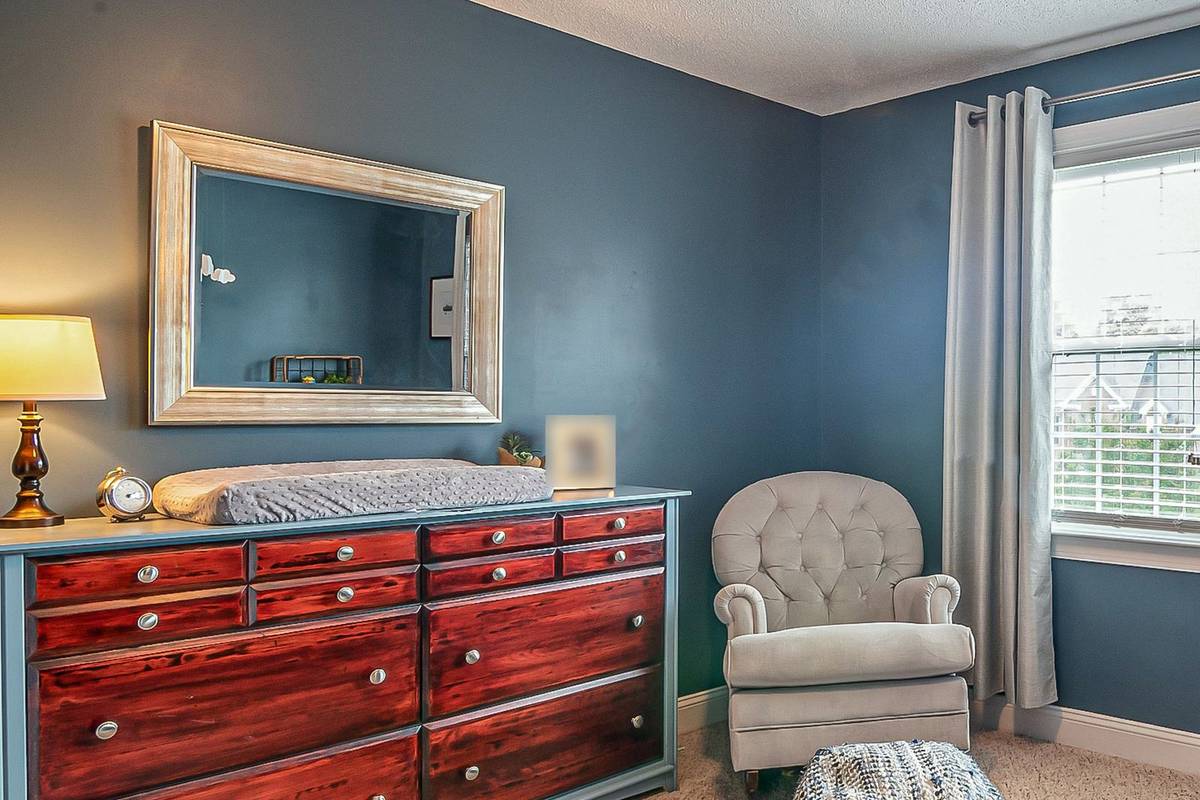
A changing pad on top of a dresser saves the floor a changing table would take. Use a contoured pad with raised sides and a strap, or an add-on changing unit, both made to the federal changing product standard.
A separate changing table should have a guardrail of 2 in on all four sides. Either way, buckle the strap, keep a hand on the baby and never step away, with diapers and wipes within your reach and out of the baby’s.
Anchor the dresser to the wall, and any bookcase or TV in the room, so nothing can tip over. Dressers made after September 1, 2023 must meet the federal stability rule and come with an anti-tip kit.
Try it with your room: Nursery Checklist Generator
6. Choose cordless shades that fit
Window covering cords can strangle a child, and the CPSC says cordless coverings are the only way to remove that hazard. About 9 children under 5 die from them each year. Stock blinds and shades sold since 2018 are cordless or keep any cord to 8 in or less, but older ones in the house may still have long cords.
For a darker room at nap time, mount the shade outside the frame. Inside the frame, a cordless roller shade leaves a gap of about 9/16 in at each side. Outside, the shade overlaps the trim and covers those gaps.
On a 48 × 60 in window, a cellular shade mounted outside comes to 51 × 65 in: 1 1/2 in past each side, 3 in above the opening and 2 in below it. Measure the window to the nearest 1/8 in before you order.
Try it with your room: Blind Size Calculator
7. Hang blackout curtains high and wide
Blackout curtains over the shade keep the room dark for naps. Mount the rod 4 to 6 in above the window and run it at least 4 in past each side, so the open panels stack beside the glass, and let them end about 0.5 in above the floor.
For the width, the panels together should measure about 2× the rod’s length. Keep them, like everything else that can burn, at least 3 ft from a space heater.
Try it with your room: Curtain Size Calculator
8. Light it for night feeds
A bedroom needs about 10 to 20 footcandles, and one footcandle is one lumen per square foot. That comes to 1,440 to 2,880 lumens for a 12 by 12 ft nursery.
For feeds in the night, a lamp beside the chair lets you see without the ceiling light. Choose a night-light that stays cool, and keep it away from curtains and bedding.
A sound machine, if you use one, goes across the room from the crib, turned low. Turned up, one can top 50 dB, the noise limit for hospital nurseries, at 30 cm from the baby.
Try it with your room: Room Lumens Calculator
9. Make a cozy corner for feeding
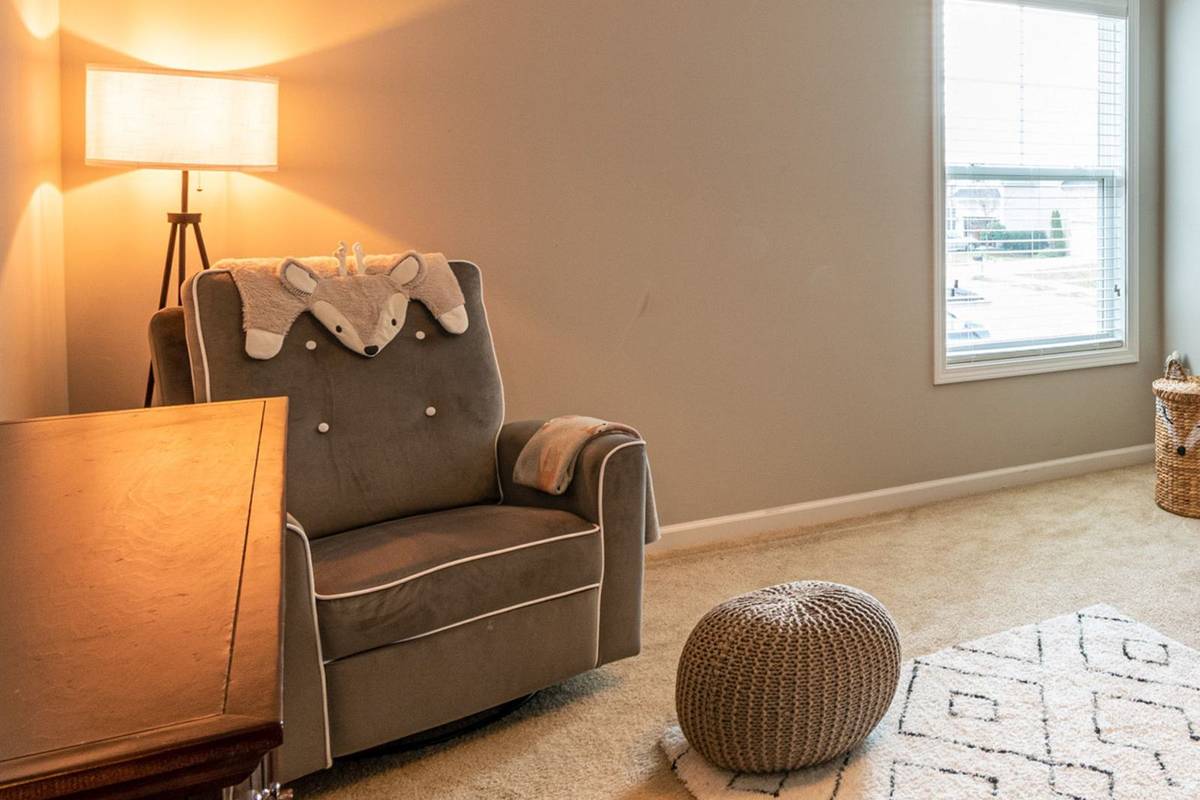
A glider or rocker with good back and arm support, a small table beside it and a lamp make a feeding corner. Give it a quiet corner and about 38 1/4 × 36 in of floor.
If the baby falls asleep while feeding, move them to their own bed. The AAP warns against sleep on a couch or an armchair.
A rug softens the corner, and the floor for play later. Leave bare floor between the rug and the walls, about 18 in, or down to 8 in in a small room.
Try it with your room: Rug Size Calculator
10. Hang art over the dresser
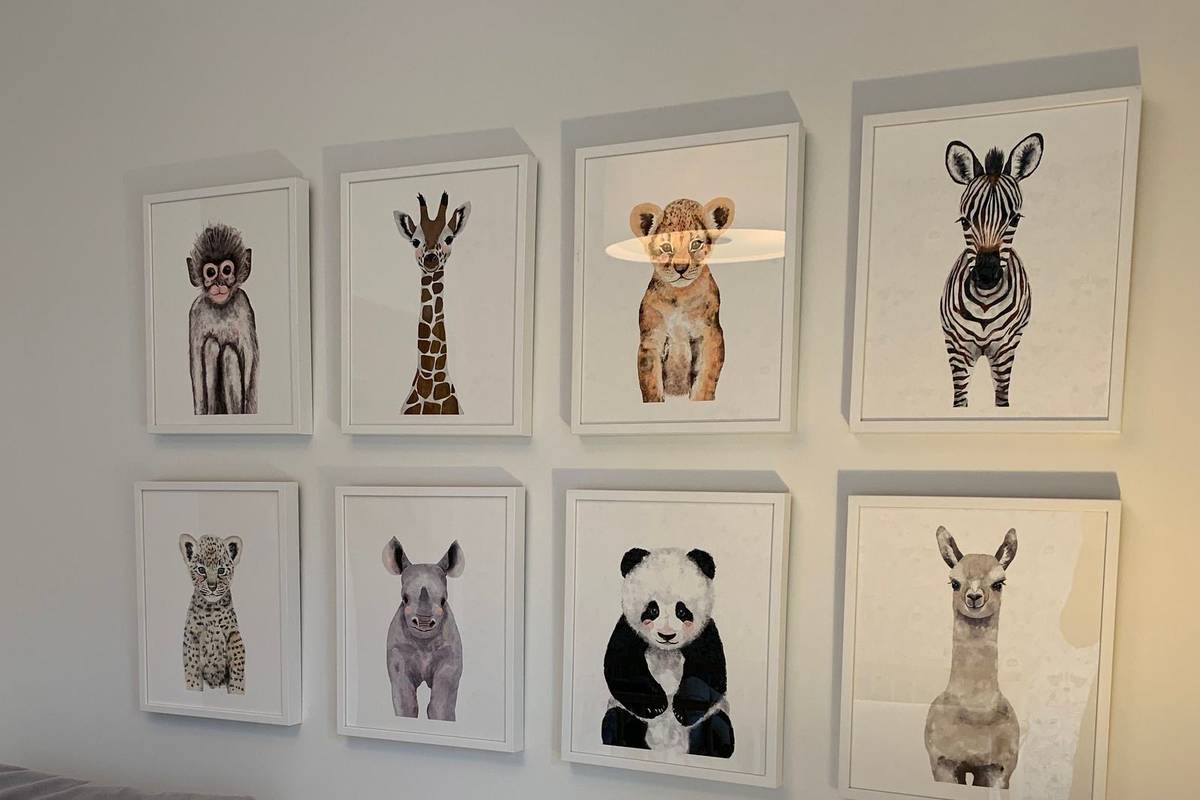
The wall above the dresser or the chair is the place for art. Size it to the furniture below, about two-thirds to three-quarters of its width, which comes to 32 to 36 in over a 48 in dresser.
A grid of matching frames, like the one in the photo, reads as one piece. The gallery wall ideas have more layouts with their sizes and spacing.
Try it with your room: Wall Art Size Calculator
11. Keep the colors calm
A soft palette is easy to live with as the room changes. Give the main color about 60% of the room (usually the walls), a second color about 30% (curtains, the rug, upholstery) and an accent about 10% (art, a lamp, small things).
For walls that feel light and airy, look for a light reflectance value (LRV) of 50 to 60 on the paint chip. Paint samples about 2 × 2 ft on the wall and look at them for a few days before you choose.
In a home built before 1978, the old paint may contain lead, so use lead-safe work practices when you prepare the walls, as the EPA advises. The paint calculator works out how much paint the walls take.
Try it with your room: Room Color Palette Generator
12. Finish with the safety basics
Put a smoke alarm in the nursery, as in every bedroom, plus one outside each sleeping area and on every level. Test them monthly and replace them every 10 years.
Add a carbon monoxide alarm outside each sleeping area and on every level. Cover the outlets, or use tamper-resistant ones, and if the room needs a humidifier, use a cool-mist one.
The nursery checklist generator lists all of this for your plans, with what to have ready before the baby comes and what can wait until the baby moves to the crib.
Try it with your room: Nursery Checklist Generator
These ideas follow the safe sleep rules for babies in general. Follow the instructions that come with each product, check for recalls, and ask your baby’s doctor about anything specific to your baby.
Every bedroom calculator is on the Bedroom page, with the nursery checklist and the sizes for the rest of the room.
Frequently asked questions
What should be in a baby's crib?
Only a firm, flat mattress made for the crib and a fitted sheet. Leave out bumpers (banned since November 12, 2022), pillows, blankets, positioners and soft toys, and dress the baby in a wearable blanket instead.
Where should the crib go in a nursery?
Against a solid wall, away from windows and from blind and curtain cords. Keep every cord, the baby monitor's included, at least 3 ft from any side of the crib, and anything that can burn at least 3 ft from radiators and space heaters.
Does a newborn need a nursery right away?
Not for sleep. Share a room for at least the first 6 months, with the baby's own bed near yours but not in it. The nursery can still hold the changing station, the dresser and the chair from the start.
What size is a standard crib?
A full-size crib runs 53 3/4 to 55 in long and 28 1/2 to 29 3/4 in deep on the outside, depending on the model. Its mattress has to be at least 27 1/4 × 51 5/8 in, with no more than 2 fingers of gap at the sides.
What window coverings are safe in a nursery?
Cordless ones. The CPSC says cordless blinds, shades and curtains are the only way to remove the strangulation hazard of window covering cords. Keep the crib away from the window too.
Save it for later
Pin this page so it's handy when you're ready to buy.
Save to Pinterest (opens in a new tab)