12 Curtain Ideas, With the Sizes That Make Them Fit
Curtains look right when the rod, the length and the width are sized to the window and to the wall around it. Each idea below comes with its numbers and a link to the calculator that works them out for your window: the rod runs at least 4 in past each side of the window, for one.
By Nora Callahan · Updated

Measure each window before you shop: its width from the outside edge of the trim to the other (or of the frame, if there’s no trim), and the heights of its top and its sill from the floor. Add the ceiling height, and note anything beside the window, a wall, a cabinet or a bookcase, that would keep the open curtains from stacking there.
1. Hang the rod high to make the window look taller
A rod mounted well above the window carries the eye up and makes the window look taller. Set it half to two-thirds of the way from the top of the window to the ceiling, and keep at least 1 in between the rod and the ceiling.
For a 40 in window whose top is 84 in from the floor in a 9 ft room, that puts the top of the rod 96 to 100 in from the floor. With it at 96.5 in, ready-made 96 in panels end 0.5 in above the floor, as in the drawing. Under a low ceiling, or over a window that reaches nearly to it, mount the rod 4 to 6 in above the window instead.
Try it with your room: Curtain Size Calculator
2. Run the rod past the window so the glass stays clear
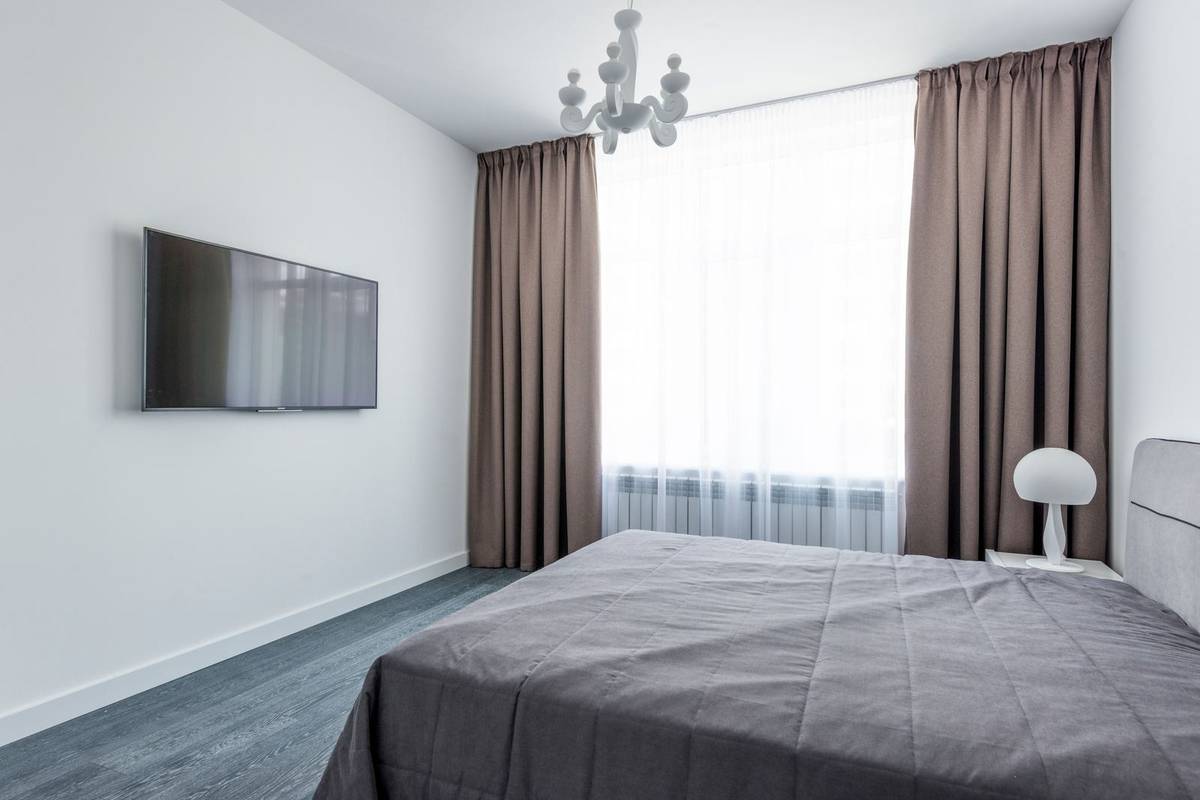
Open curtains bunch up, so give them wall to stack on. Extend the rod about a sixth of the window’s width past each side, a third of the width in all, and never less than 4 in a side. The open panels then frame the window instead of covering the glass, and the room keeps its daylight.
On the 40 in window, that’s 6.7 in a side and a 53.3 in rod, measured bracket to bracket without the finials. A rod longer than 48 in needs a center bracket so it doesn’t sag.
Try it with your room: Curtain Size Calculator
3. Choose where the curtains meet the floor
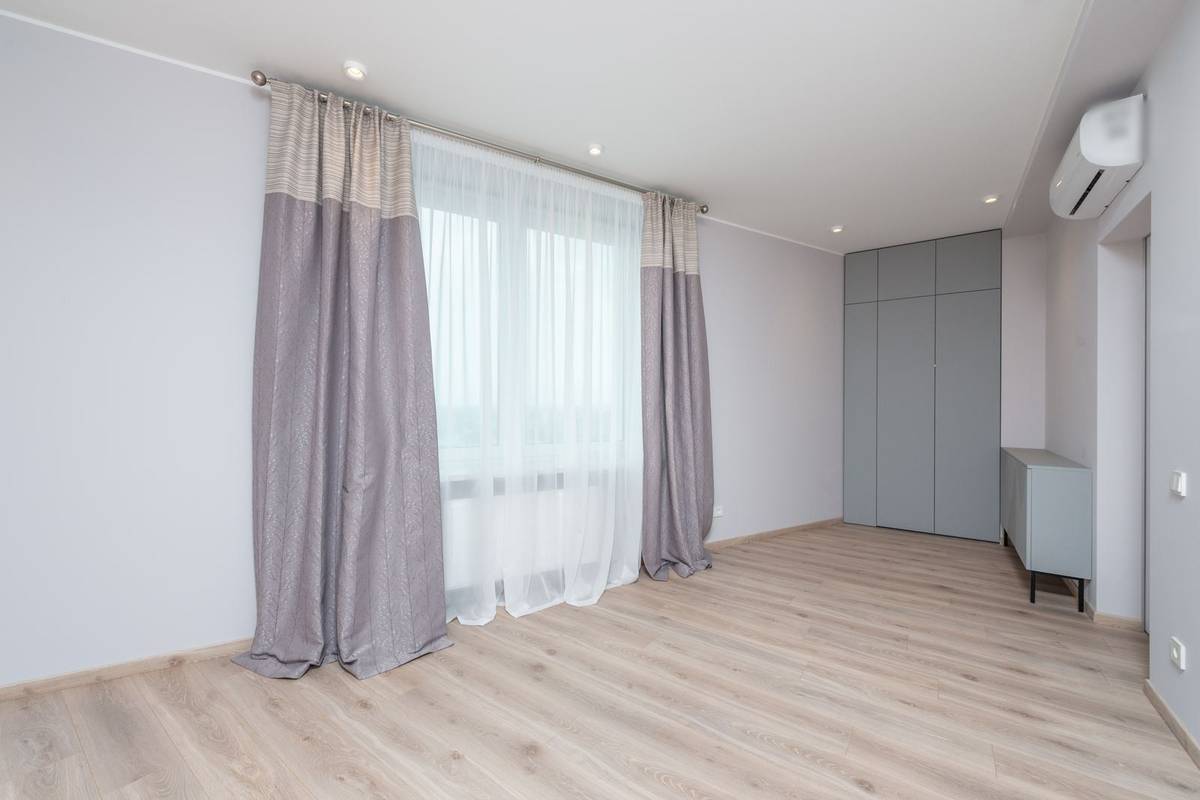
Panels that end about 0.5 in above the floor (0.25 to 1 in) clear it as you open and close them, and they’re the easiest to keep clean. Curtains that just touch the floor, break on it by 1 to 2 in or puddle 3 to 6 in each leave more fabric on the floor.
Save a puddle for curtains you rarely close: fabric pooled on the floor gets dragged about and gathers dust and pet hair. If the floor isn’t level, measure the length at each side and use the longer one.
Try it with your room: Curtain Size Calculator
4. Measure from the rod, then buy a standard length
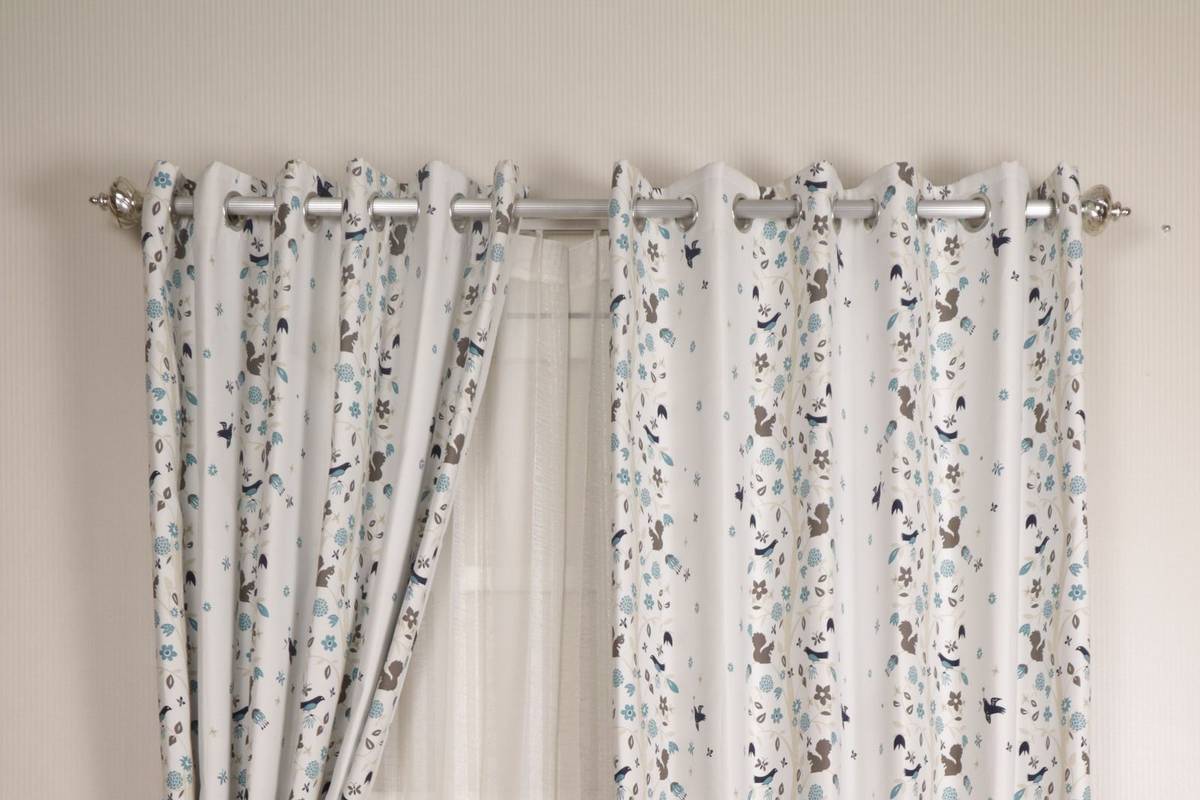
Ready-made panels come in 63, 84, 95, 96, 108 and 120 in. Measure the length from the top of the rod down to where you want the curtains to end. On clip rings, measure from the bottom of the rings instead, since the rings hang the curtains about 3 in lower.
When your measurement falls between two lengths, move the rod up or down a little to suit the shorter one, or buy the longer one and hem it: a curtain can always be shortened, but it can’t be made longer. Wash the panels before you hem them, in case the fabric shrinks.
Try it with your room: Curtain Size Calculator
5. Buy enough panels for full curtains
Flat panels only look full when there’s more fabric than rod. Together, the panels should measure about 2× the rod’s length: 1.5× for a lighter, flatter look and 2.5× for a fuller one. Divide that by one panel’s width and round up to a whole pair, since panels come in pairs that open from the middle.
On the 53.3 in rod from the first idea, 2× comes to 107 in of fabric: two panels 54 in wide. Pleated curtains are the exception: their fullness is sewn in, so order them by the width they cover.
Worked example
A 60 in window in an 8 ft room, the rod just above it, on clip rings
What we know
- Window: 60 in wide, top 80 in and sill 30 in from the floor
- Ceiling: 96 in
- Curtains: with a break on the floor, on clip rings, 2.5× fullness, 54 in panels
How it works out
- Rod: 60 in + 2 × 10 in (60 in ÷ 6) = 80 in.
- Rod height: 80 in + 4 to 6 in = 84 to 86 in.
- Length: 84 in panels with the rod top at 85.5 in and 3 in for the rings end 1.5 in past the floor.
- Panels: 80 in × 2.5× ÷ 54 in = 3.7, so four, in two pairs.
Four 84 in panels on an 80 in rod. Extend the rod 10 in past each side of the window, a sixth of its width, so the open curtains stack beside the glass: an 80 in rod, bracket to bracket. An adjustable rod sold as 66 to 120 in covers it; over 48 in, give it a center bracket. Mount the rod with its top 85.5 in from the floor, 5.5 in above the window; just above the window is 4 to 6 in up, 84 to 86 in. On clip rings the curtains hang 3 in below the top of the rod, and the length allows for it. 84 in panels then end 1.5 in past the floor. At 2.5× fullness the curtains add up to 200 in across: four panels 54 in wide, two pairs that open from the middle.
Try it with your room: Curtain Size Calculator
6. Layer sheers under heavier curtains
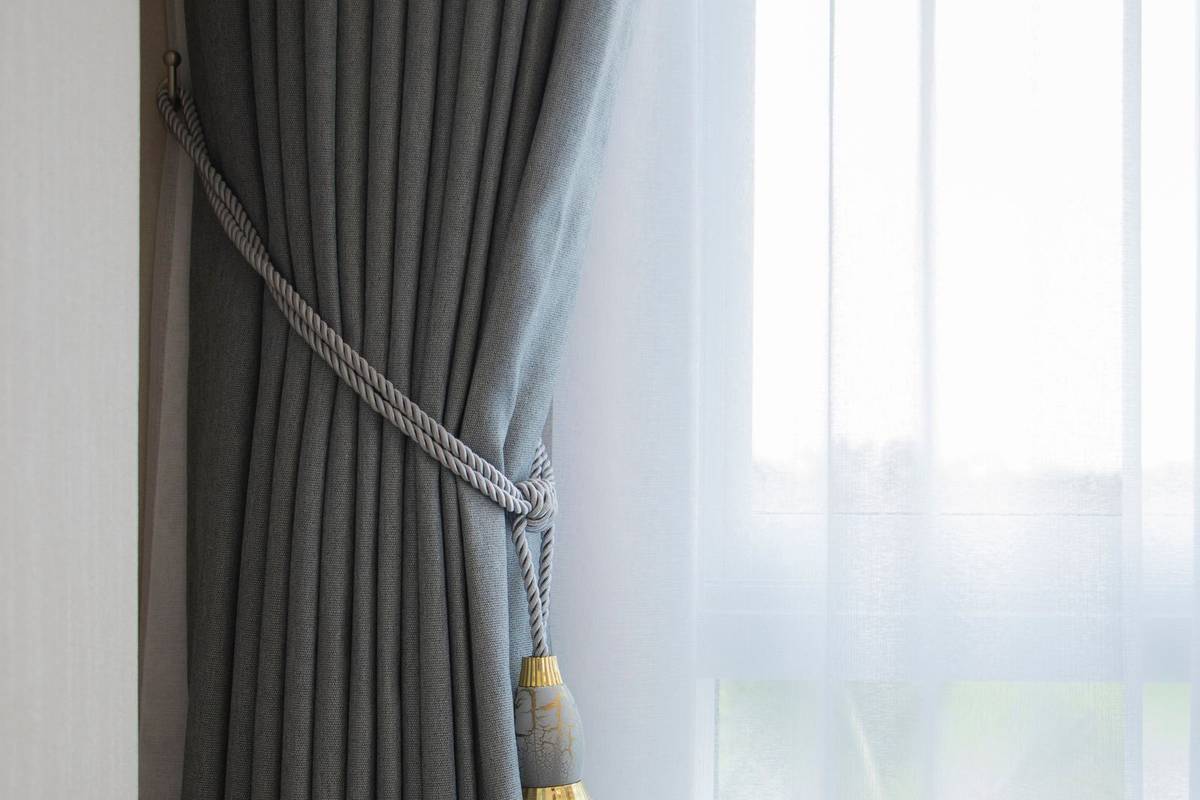
Sheers under a heavier pair give you daylight with some privacy when the curtains are open, and the full cover of the heavier fabric when they’re closed. On a double rod, hang the sheers on the back rod, nearest the glass, and the heavier curtains on the front one.
Sheers look best gathered more fully: give them 2.5× to 3× the rod’s length, against 2× for the curtains in front.
Try it with your room: Curtain Size Calculator
7. Darken a bedroom with a shade under the curtains
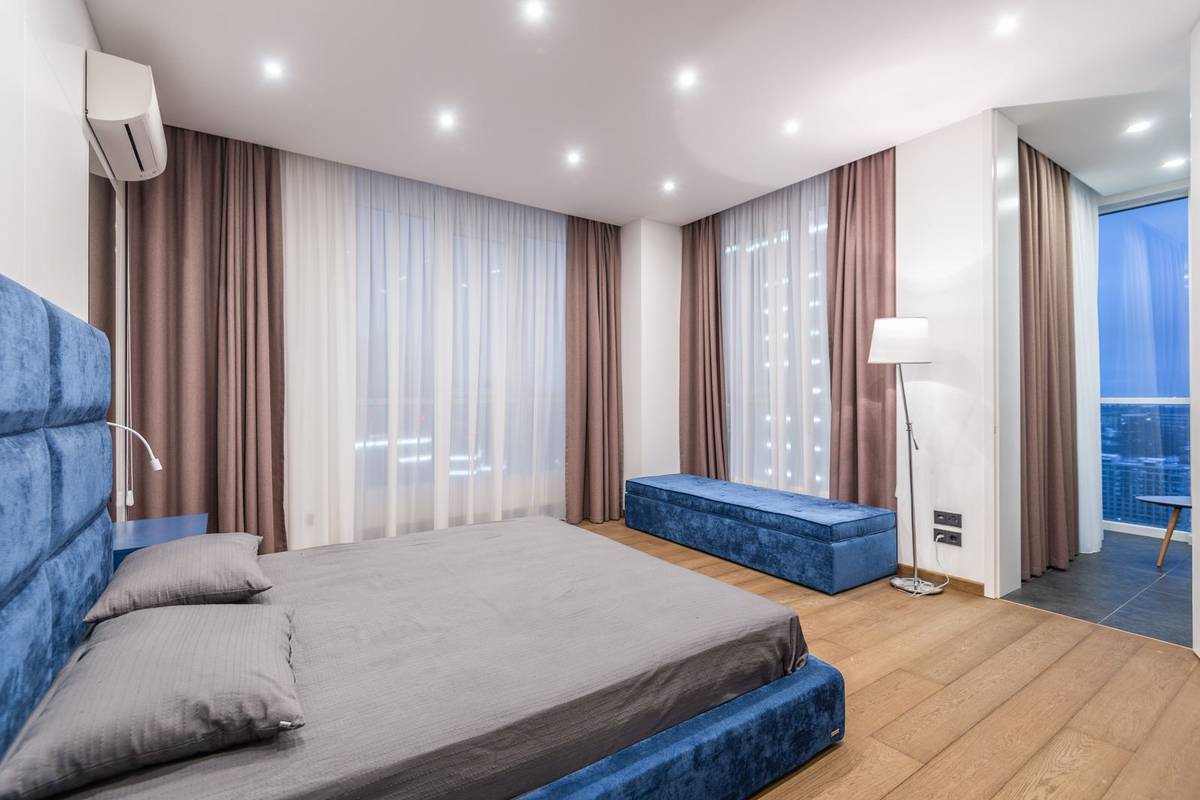
For sleep, pair a room-darkening shade with lined curtains. A shade mounted inside the window frame leaves a small gap at each side, about 9/16 in for a cordless roller shade, where light gets in. Curtains on a rod that runs past the window cover those gaps when they’re closed.
Or mount the shade outside the frame, where it overlaps the trim and blocks more light. A roller shade needs 2 in of depth inside the frame. In a frame only 1 1/2 in deep, mount it outside: on a 34 1/2 × 60 in window, order 40 1/2 × 63 in, 3 in past the opening at each side. For a baby’s room, the nursery ideas cover cordless shades and where the crib goes.
Try it with your room: Blind Size Calculator
8. Fit a blind inside the frame, curtains outside it
A blind inside the frame leaves the wall around the window free for the curtain rod. Measure the opening to the nearest 1/8 in: the width at the top, middle and bottom, keeping the narrowest, and the height at the left, middle and right, keeping the longest. Order that exact size with no deductions, since the factory takes off what the blind needs to clear the frame.
A 34 1/2 × 60 in window that’s 3 1/4 in deep takes faux wood blinds ordered at 34 1/2 × 60 in, as in the drawing. Faux wood blinds need 3/4 in of depth inside the frame, and 2 3/4 in to sit flush with it.
Choose cordless blinds and shades for every room where a child may be. The CPSC says about 9 children under 5 die each year from window covering cords, and that cordless coverings are the only way to remove the hazard. Stock coverings sold since 2018 are cordless or keep their cords out of reach.
Try it with your room: Blind Size Calculator
9. Keep kitchen curtains short and clear of the stove
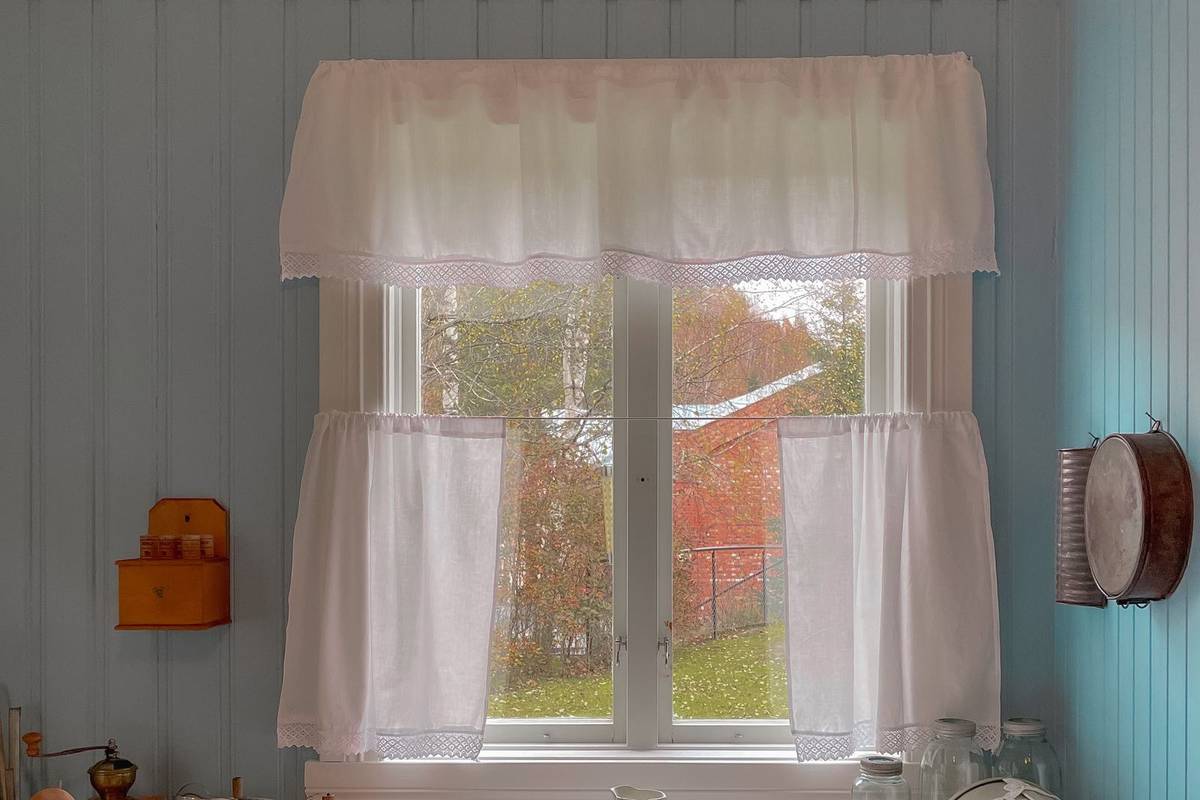
Over a sink or a counter, curtains that end at the sill stay out of the water and off the counter. Take a 36 in kitchen window whose top is 72 in from the floor and whose sill is 42 in up: a rod 4 to 6 in above it and 6 in past each side, 48 in long, takes two 36 in panels that end at the sill.
Short tier curtains come in 24 and 36 in lengths. If wall cabinets sit close to the window, check that there’s room beside it for the open panels to stack.
Keep curtains away from the stove. The U.S. Fire Administration says to move things that can burn away from the stove, and names curtains along with dish towels, bags, boxes and paper. If a window is right beside the cooktop, choose a covering that can’t reach the burners.
Try it with your room: Curtain Size Calculator
10. Run one rod across a sliding door or a row of windows
Size a sliding glass door like a window that reaches the floor. A 72 in door in a 9 ft room takes a 96 in rod, 12 in past each side so the open curtains clear the door, with its top 96.5 in from the floor. Then four 96 in panels end 0.5 in above the floor, as in the drawing. Check that no wall or furniture beside the door keeps the panels from stacking there.
One rod across a row of windows treats them as one wide window. For a row 120 in across, the rod runs 20 in past each end, 160 in in all, and an adjustable rod sold as 120 to 170 in covers it. At 2× fullness, that takes six panels. Adjustable rods are sold up to about 170 in long; past that, look for a custom one. Any rod over 48 in needs a center bracket.
Try it with your room: Curtain Size Calculator
11. Follow a bay window around
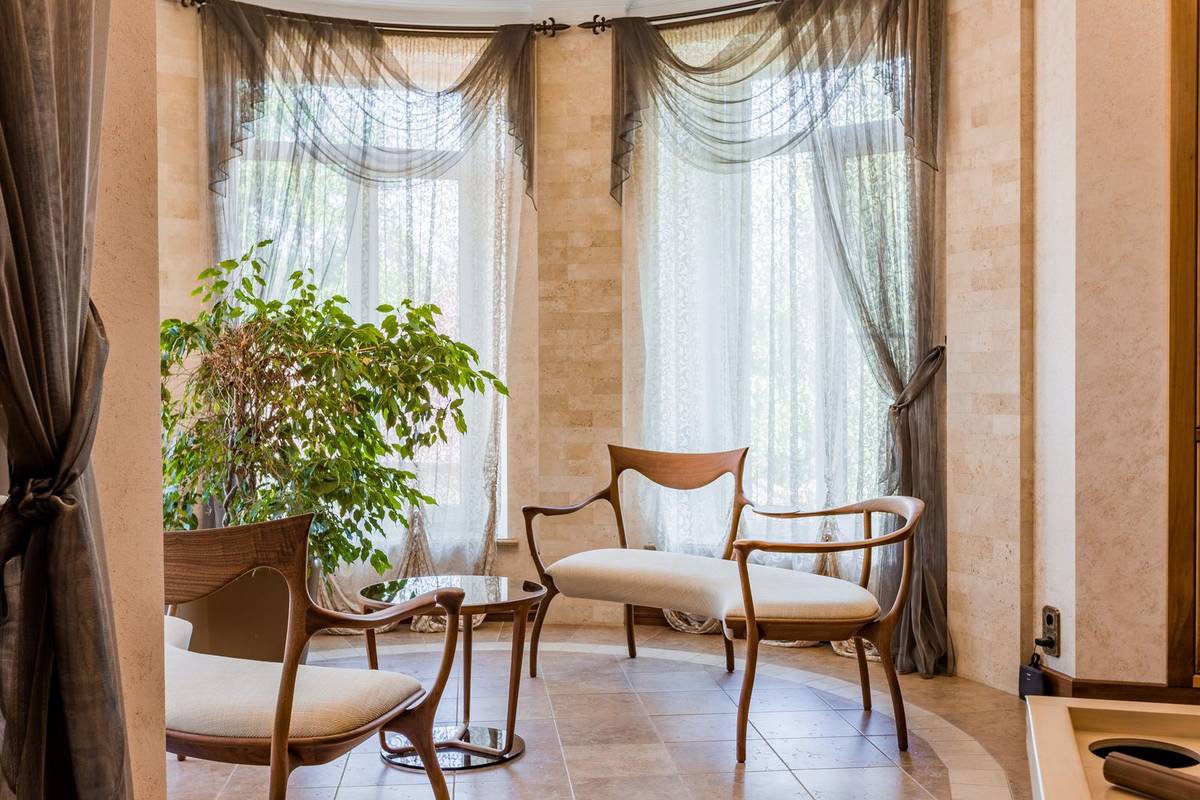
A bay takes a corner rod that follows it around, made to the lengths and angles you measure. Measure each section of wall along the wall itself, at the height the rod will go, and measure both corners: they’re often close to the same angle, but not always.
Keep the rod at one height all the way around, and leave room past the outer windows for the open curtains to stack. Then size the curtains for each window on its own: the calculator works one window at a time.
Try it with your room: Curtain Size Calculator
12. Take the curtain color from the room’s palette

Curtains cover a lot of wall, so they make a natural home for a room’s second color. In a three-color palette, the main color takes about 60% of the room (usually the walls), the second about 30% (window treatments, upholstery, the rug) and an accent about 10% (pillows, art, a lamp).
Start from a color the room already has, a navy sofa or a favorite rug, and the palette generator gives you the other two, with the share each one takes.
Try it with your room: Room Color Palette Generator
Every living room calculator is on the Living Room page, and the room sizes you enter in one carry over to the others. For the rest of the house, the dining room ideas and the small bedroom ideas put the curtains with the table, the bed and the light.
Frequently asked questions
How high should you hang curtains?
Mount the rod 4 to 6 in above the window, or half to two-thirds of the way from the top of the window to the ceiling to make the window look taller. Keep at least 1 in between the rod and the ceiling.
How far past the window should a curtain rod go?
About a sixth of the window's width on each side, and never less than 4 in, so the open curtains stack on the wall instead of over the glass. A 40 in window takes 6.7 in a side, a 53.3 in rod.
How long should curtains be?
For floor-length curtains, aim for about 0.5 in above the floor, measured from the top of the rod, or from the bottom of clip rings. A break adds 1 to 2 in on the floor and a puddle 3 to 6 in. Ready-made panels come in 63, 84, 95, 96, 108 and 120 in, so set the rod at the height one of them needs, or hem a longer one.
How many curtain panels do I need?
Enough that together they measure about 2× the rod's length, up to 3× for sheers. Divide that by one panel's width and round up to a whole pair: a 53.3 in rod takes two panels 54 in wide.
Should blinds go inside or outside the window frame with curtains?
Inside, when the frame is deep enough: it leaves the wall around the window free for the curtain rod. Faux wood blinds need 3/4 in of depth inside the frame, and 2 3/4 in to sit flush. Outside, a blind or shade overlaps the trim and blocks more light, which suits a bedroom.

Save it for later
Pin this page so it's handy when you're ready to buy.
Save to Pinterest (opens in a new tab)